Train strikes

It seems that the UK has been in the grip of transport strikes for more than a year, and they continue.

The main ones currently seem to be train and tube strikes. As we write this, new ones start tomorrow and continue for a block of time.

If you are in London, or anywhere in the UK, and intend to travel, then you may be affected.

There are plenty of places to find information on what actually is happening. The BBC shows the dates and services affected as soon as they are available, and this is always in advance of any action.

Different unions strike on different days and for different reasons. So you may find, for example, a day when Heathrow Express is running but the Underground is not, then the next day Heathrow Express has a strike but the tube is normal.

A strike can mean many things. There can be literally no service on a line for a day, or there can be a very restricted service, maybe one train an hour. If it’s the latter, the train companies usually show some kind of a temporary timetable.

What you may also find is that the service late the night before a strike is affected as trains need to be moved to certain places, and the day after a strike can also be disrupted.
Posted in News, Public transport | 1 Comment

Heathrow tube

Although it’s a bit beyond our site’s purpose, there are a few words to be said about the Piccadilly line going to Heathrow, because it could be confusing.

Trains heading west from central London on the Piccadilly line split at Acton Town. Make sure you are not going on the trains that head north towards Uxbridge. Check on the indicators, on the front of the train and station announcements that it’s a Heathrow train.

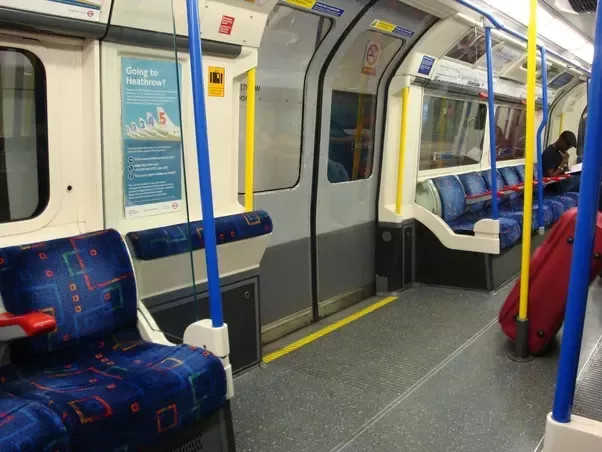
The line also splits after Hatton Cross. You will need to know which airline you are travelling on and which terminal they are using for that flight. This is especially complicated if it’s a code share. There are posters on the trains showing which terminal you need, but don’t believe them alone. Check your actual flight on the day.

Also be aware that there is no wireless on the train, only at stations. Some parts of this route are above ground, so your phone may get a signal, but not all of the route, so don’t leave it to the last minute.

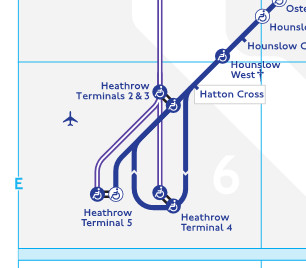
Some trains from Hatton Cross go to Terminals 2 and 3, then on to Terminal 5. The signs will say “T2 & 3 and T5” or similar.

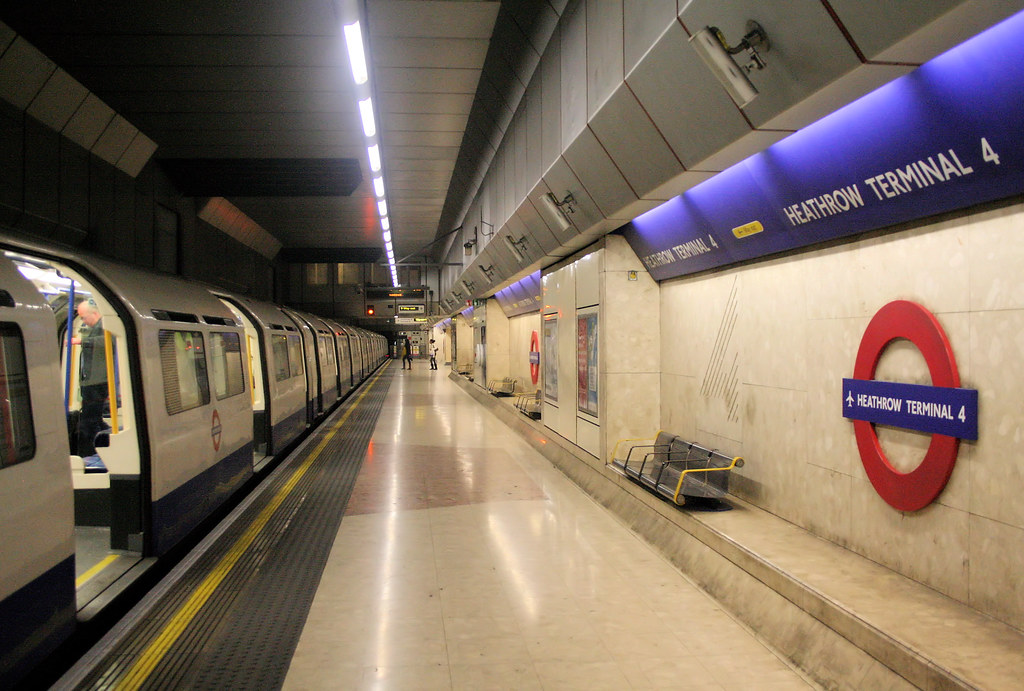
Other trains go to Terminal 4 first, then turn back, apparently heading towards London, before stopping at Terminals 2 and 3. The signs will say “T4 and T2 & 3”.

There is no Terminal 1 any more, even if the on-platform indicators say there is.

You can see from the map extract that there’s a kind of one-way loop that takes your round the houses, well, the airport a bit. It’s often called the “T4 loop”. Don’t be confused that the train seems to be going back the way you came.

If you are going to T2 or T3 you can take any train. Our experience is that T5 trains are quicker but less frequent, but it depends.

If you are going to T4 you have no choice.

If you are going to T5 you have no choice.

If your required train is not shown you can go as far as Hatton Cross and then change. It won’t be any faster, but it will at least get you close.

Use the extra large spaces on the train for any suitcase or big bag you may have, but keep an eye on it.

Make sure you have a valid ticket or payment method. Make sure you allow plenty of time in case of delays.

Posted in London, Public transport | Leave a comment

The Underground

This is information on how to use the tube system.

Most (>55%) of the Underground is not under ground. The parts in central London are, but beyond that, where there is space to build tracks, it is above ground, mostly (well, on the ground). Places like Heathrow are under ground, for obvious reasons.

The furthest station from Charing Cross is Chesham, 40km away.

Types of tube train

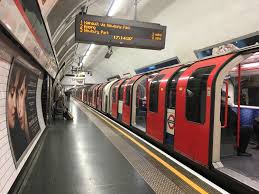
There are two types of tube train: those that travel through the smaller, deep tunnels:

This includes the Northern, Victoria, Bakerloo and Jubilee lines.

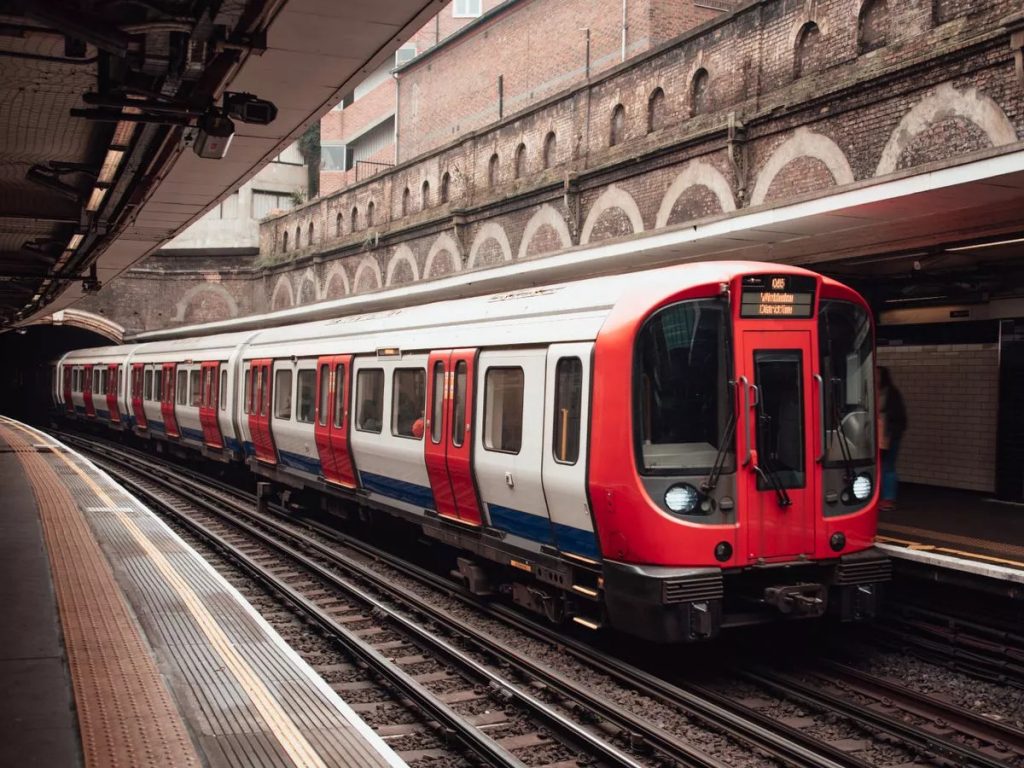
Other trains use tunnels based on the cut-and-cover system and are taller and more train-like:

This includes District, Metropolitan and Circle lines.

Opening times

It varies by line, but the first trains in the morning are usually around 5am.

Last trains in the evening are 11.30pm or so.

Some lines operate a limited all night service on Fridays and Saturdays: these are the Central, Jubilee, Northern, Piccadilly and Victoria lines.

Some lines or stations may be closed at times for engineering works or because they are unused at certain times (eg Waterloo and City is closed at weekends).

There is a rush hour in the morning and late afternoon. Some stations can be very busy around 10pm when theatres and concerts finish.

Posted in London, Public transport, Travel | Tagged | Leave a comment