Charing Cross is essentially the centre of London. Close by is the point where all distances are measured.
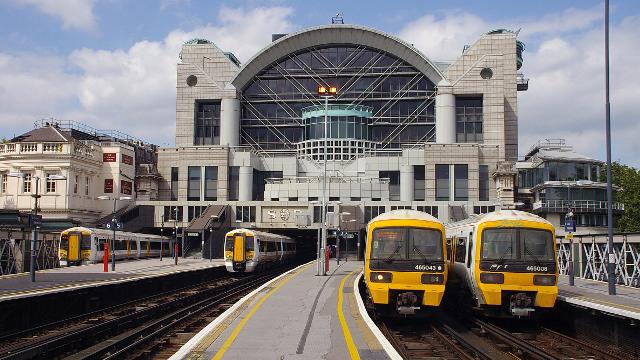
It’s directly across the river from Waterloo, and has platforms that extend on a bridge part way across the Thames. The bridge is a good way of crossing the river to the south bank on foot and is accessible.
Charing Cross is the end of the line from London Bridge and Waterloo East. It serves Kent, so Dartford, Dover, Canterbury, Folkestone and Hastings. Some of these still have ferry services to the continent.
Waterloo station is one of the most famous in the country, and not just for songs by The Kinks. It’s one of the busiest, if not the busiest (though Liverpool Street may contest that). You are warned.
The whole area has many hotels, entertainment venues, and eating places.
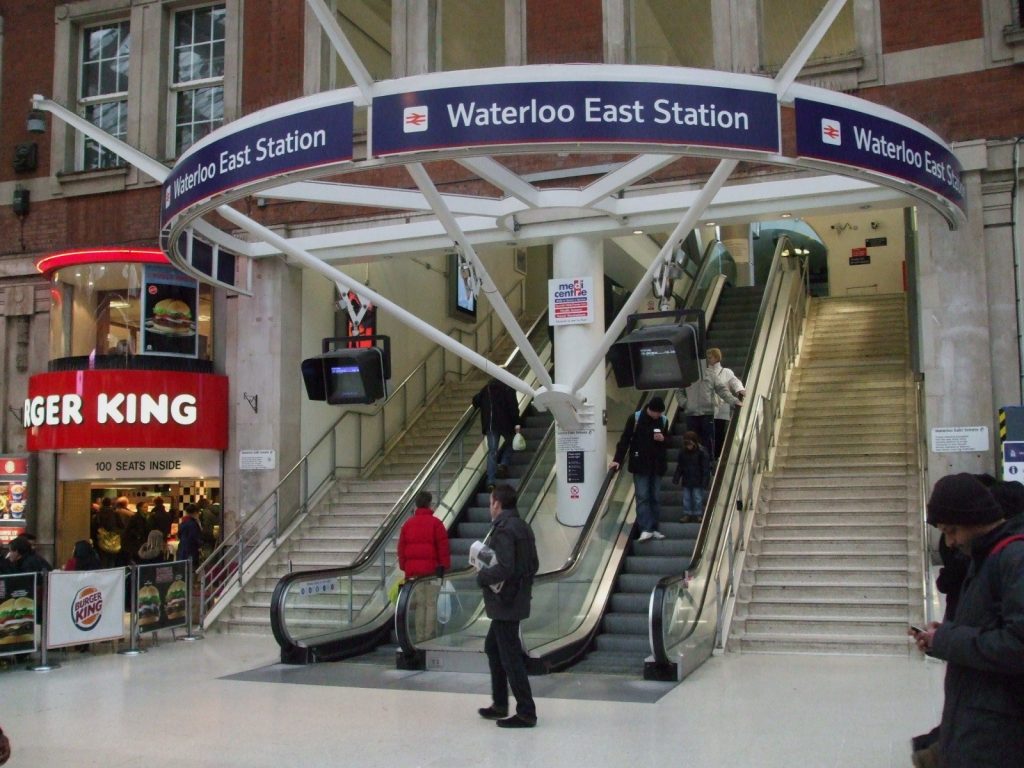
Actually, it’s two stations. There’s Waterloo East, which is on the line between London Bridge and Charing Cross.
There’s not much to it, beyond an exit at the far end which gets you, eventually, to Southwark Underground station (Jubilee line). Platforms here have letters, A, B and so on, to avoid confusion.
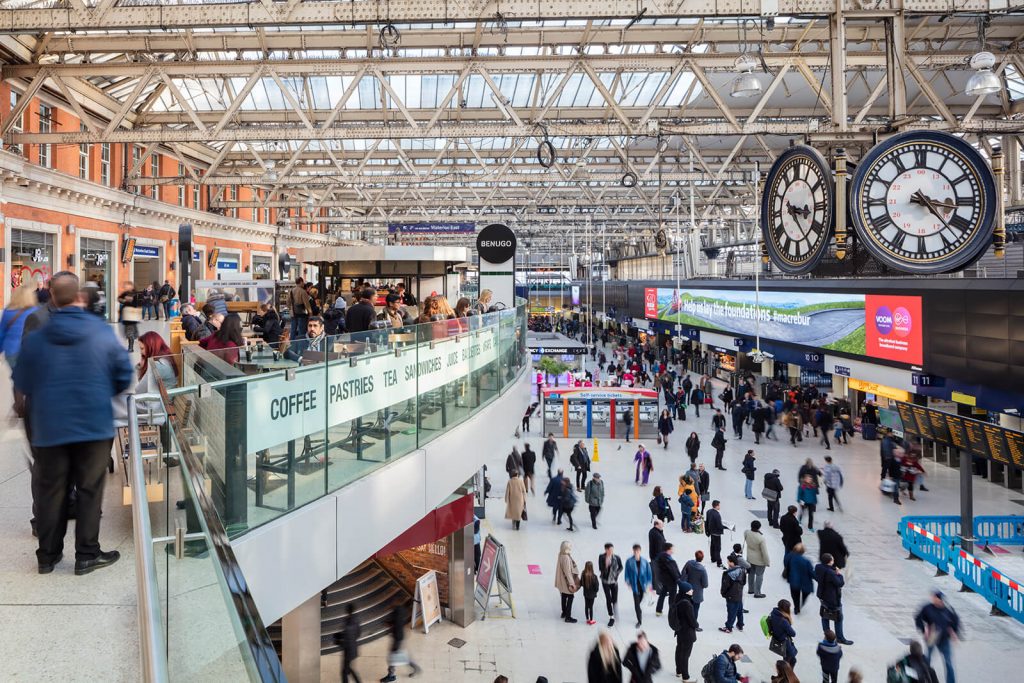
The main station has a lot of platforms. There’s the famous clock, a bridge to Waterloo East, steps down to the South Bank and it’s not miles to the actual Waterloo Bridge.
In total there are something like 24 platforms. The highest numbered ones, on the right as you look at them, used to be for the Eurostar.
If you arriving here you could have come from the south west, so Portsmouth (for ferries), Reading (for Heathrow), Exeter, Guildford… so many places.
You could well be staying in the area, in which case you are in a good place to get anywhere you need.