“The Jazz Singer”

If you ask people what the first talkie was you will get some funny answers. “Some Like It Hot”… “The Wizard Of Oz”, “The Jazz Singer”.

The latter film, from 1927, is generally considered to be the correct answer. It isn’t really, as we will see.

Well, OK, it depends what you mean by ‘talkie’. I am expecting a film with people talking throughout, something of feature length (ie not a short) and possibly a recorded musical score, though that is not essential.

This Al Jolson film does indeed have some speech, but it’s not all the way through, and mostly there are the usual intertitle cards explaining what is happening or what characters are saying. Yes, there is a recorded musical score and there are portions where Jolson sings live and talks, but they can’t add up to more than two or maybe three minutes in the whole film. The rest is really what you would call a silent film, well, silent with synchronised sound.

Jolson’s first words are “Wait a minute, wait a minute, you ain’t heard nothin’ yet”, except Jolson had made other short films with sound and had said this before. What stunned people watching was the free and improvised nature of what he said.
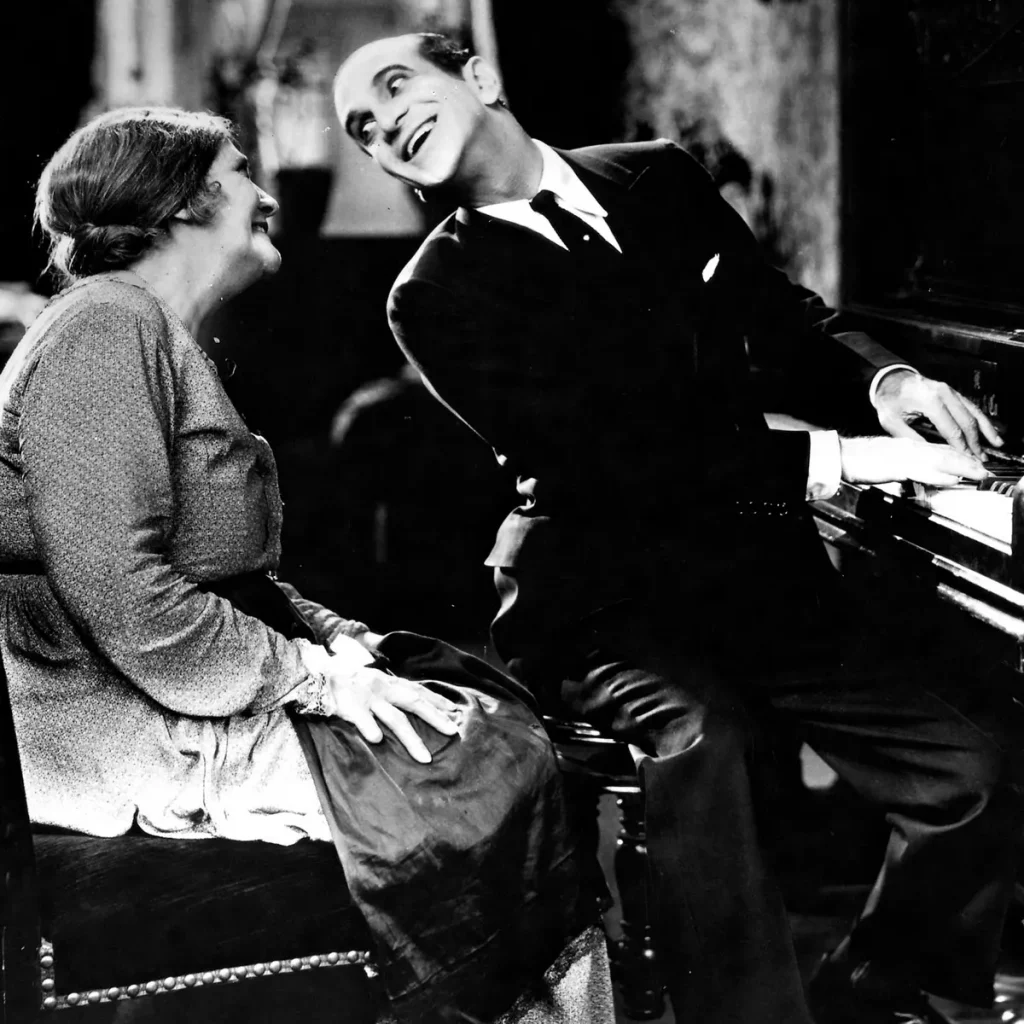
You can buy this film on home media. It’s worth watching. I find it rather squirm-worthy, not just by modern standards but by any standards. I like Jolson generally, and he was a great performer, and the film was a massive hit.

But let’s be clear, Warner Brothers themselves had produced feature films with complete synchronised scores long before this, and they produced the first all talkie film, “Lights Of New York” in 1928. Short sound films had been around since 1900, though 1923 or so is the first real record of sound films publicly demonstrated.

Nevertheless, as shown in “Singin’ In The Rain”, “The Jazz Singer” marked the point at which talkies became a thing. It has been re-made since, many times.

Some directors and producers embraced it, despite the difficulties. Others resisted. As the interviewees on “Hollywood” say, the silent film was an international language. It didn’t matter what you spoke, you could understand a silent film. The whole method of story telling changed. Talking was the thing.

One person who resisted was Charlie Chaplin.
Live Cinema

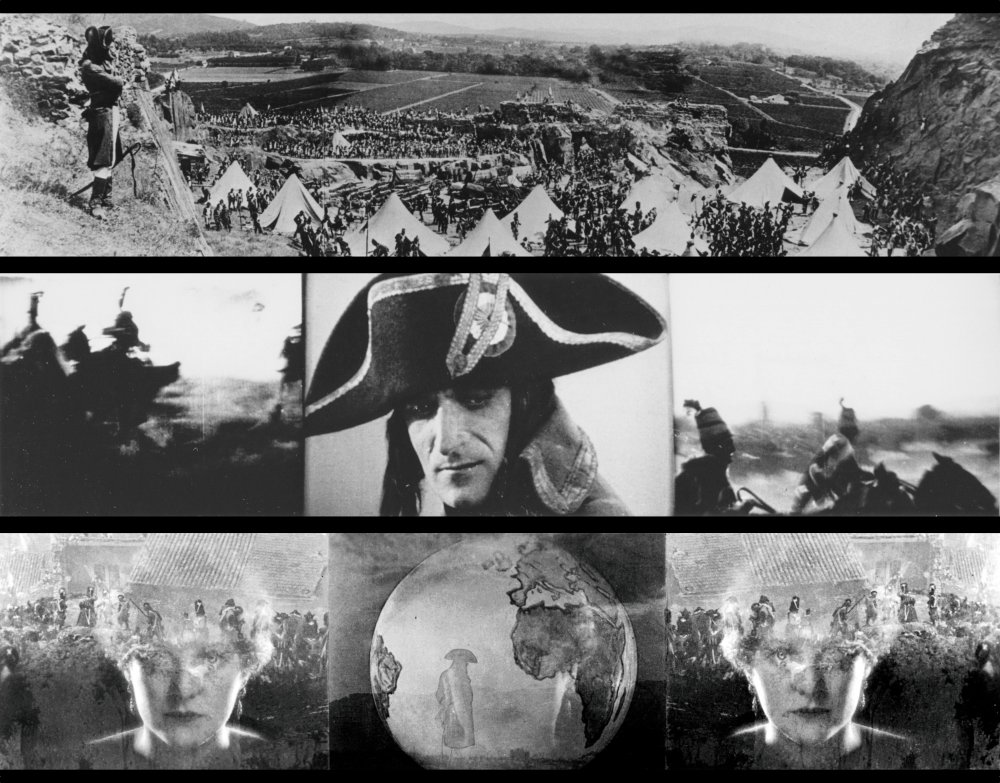
Kevin Brownlow, film historian, author and director, had a life long ambition. To restore the film “Napoleon”, directed in France in 1927 by Abel Gance, back to something like its full glory. Brownlow had come across clips in his travels, and knew it was a true silent masterpiece. He recognised that it used or even invented techniques and ideas that were rare then but are all too common now, such as multiple cameras, underwater work, tinting (ok, so it’s computerised nowadays) and a multiprojector finale (an early version of Cinerama). Apparently there had even been some 3D filming, though I suspect that is lost.

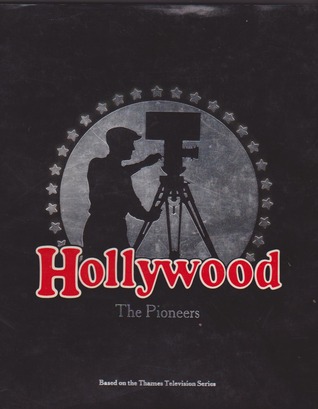
The record of Brownlow’s can be found in his book which you may still be able to find.

By the 1980s, the film was in some kind of a complete form. It was ready to be seen by the public. The success of “Hollywood” on TV had generated an appetite for silent films with music, and a showing of the five hour epic took place in London, and later elsewhere, in the early 1980s. The music used a full orchestra and was created by Carl Davis. It sold out immediately (in the pre-internet days, when booking was more difficult).

Further showings happened. I saw it at the Empire in Leicester Square. By then it had reached way more than five hours as more material had been found. Now, that’s a long time to watch a film, but for the orchestra, it is two, probably three consecutive classical concerts, so multiple breaks were in order. It was a day long event. Towards the end, Davis could be heard giving the flagging players vocal encouragement.

The success prompted Thames to request more films, so many of the films highlighted in the series “Hollywood” got similar treatment, restoration, musical score and public performances. These included “The Crowd”, “Broken Blossoms”, “Greed”, “The Wind” and “Intolerance”.

As time went on, UK station Channel 4 took up the series and we had “The Four Horsemen Of The Apocalypse” and “The Iron Mask”, running once a year until the late 1990s. Many of these films got some kind of TV broadcast and home media release. Some are still available, “The Big Parade” and “Napoleon” for example.

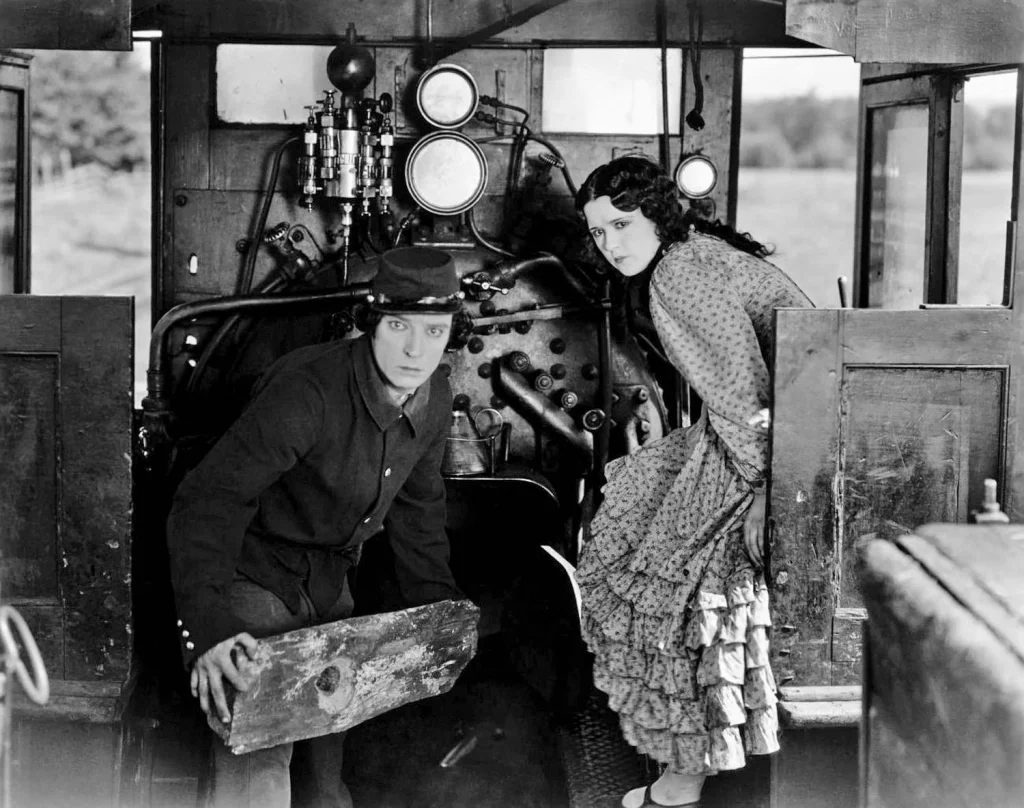
But it wasn’t all heavyweight and serious stuff. There was Keaton’s “The General” and Chaplin’s masterpiece “City Lights”. Ah yes, Charles Chaplin…

Hollywood

In the 1980s, Thames TV in the UK created a documentary series (in the days when major terrestrial stations did these kinds of things) that was hugely successful and award winning.

Created by film historian Kevin Brownlow and producer David Gill, “Hollywood” took thirteen one hour episodes (minus adverts) to tell of the beginnings of cinema in, well, Hollywood.

It was a perfect time for such a series. There was a budget for it, very many of the stars were still alive and many were happy to be interviewed (though some were not, and of course, all are now long dead), there were good (non-computer) techniques for restoring the films and some interest in the subject and the style after the success of “The World At War”.

“Hollywood” had a simple purpose. It wanted to dispel the myths of silent films all being like the Keystone Kops, fast, jerky, poor quality. Instead, clips were presented at the right speed in the best quality.

As was said many times in the series, “silent” films were not silent. There was always music, anything from a person with a piano to a full orchestra. As well as generating a book about the series, an LP was released of the music by Carl Davis. The orchestral music underscored the clips, but also continued through the interviews, adding a seamless quality to the show and a touch of class.

Episodes covered the beginnings of Hollywood, comedians (Chaplin, Keaton etc), stunt men, directors, photographers, war and westerns and much more.

Narrator was film legend James Mason.

Sadly, this series has never been made available on DVD. When asked once about it, Brownlow hinted that there were legal and copyright problems and the chances of it coming out were small. You may be able to find copies of the individual episodes on YouTube, for example here https://youtu.be/8mo3Z8IkLnU, but the quality may not be too good – VHS recordings, I suspect. They are just about watchable, and if you saw the series when it first came out, may be worth a look, if only to see the credits again.

The success of “Hollywood” spawned other short series, one on Chaplin, one on Keaton and more on Harold Lloyd.

And, it invented, or re-invented, Live Cinema.