“Safety Last!”

Harold Lloyd made a huge number of silent, and sound comedy films. For a long time he was Lonesome Luke, a kind of Chaplin clone. But so many people did that.
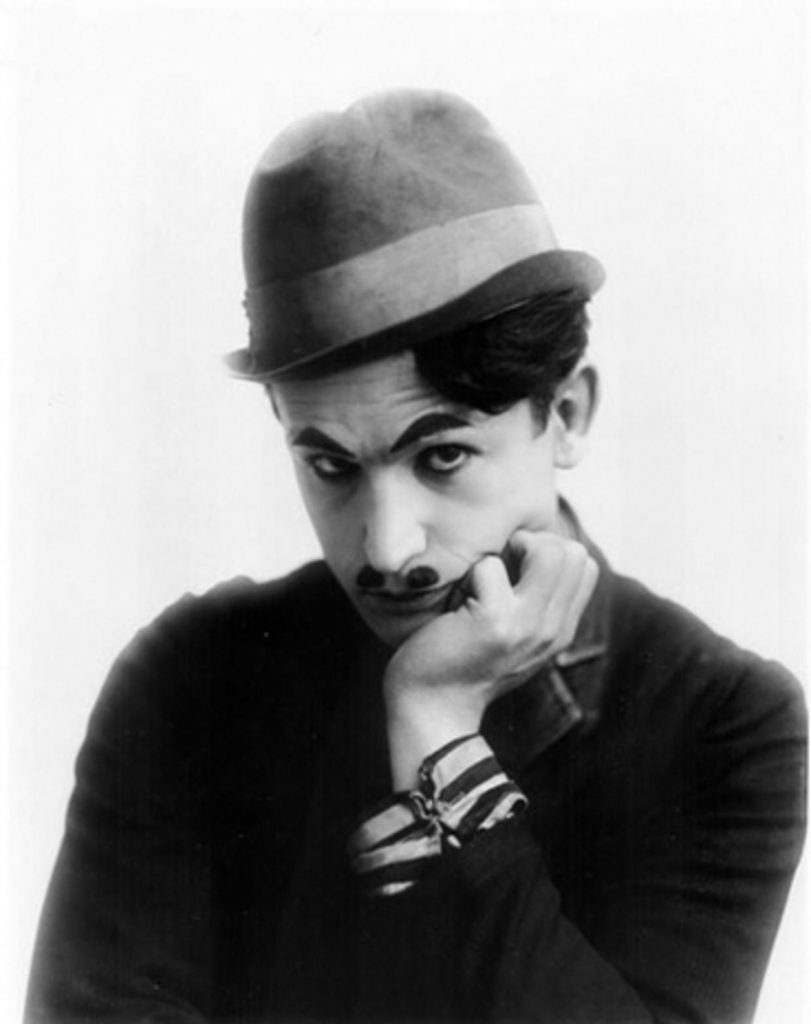
But if you know about Lloyd, that’s not the image you think of. Harold Lloyd hit his most famous character with the spectacles and the hat:

This Harold was the rather meek, gentle victim of circumstance.

His most famous film is “Safety Last!” Released in 1923, black and white and a silent film running about 75 minutes.

In it, Harold plays a country boy who comes to the big city to be famous. He writes home, telling the folks, and his girl, how successful he has become. It’s a lie. He is working in a store dealing with difficult customers:
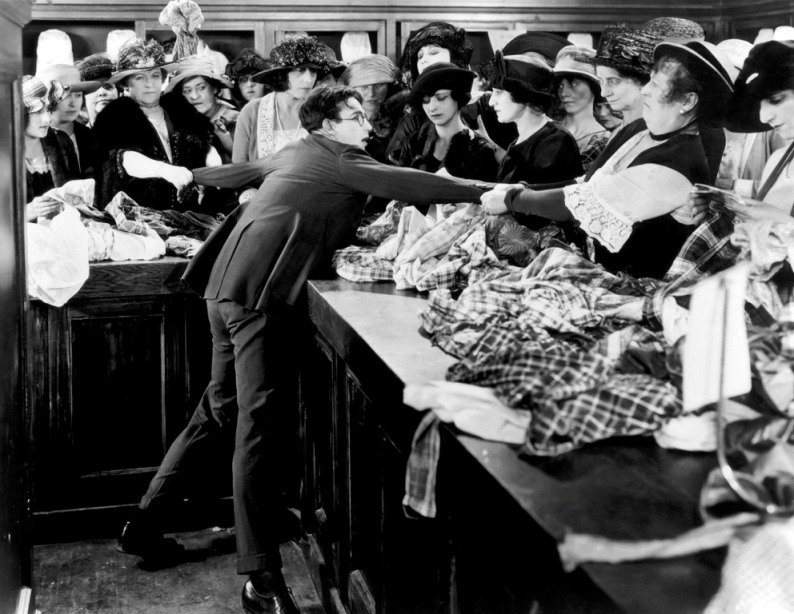
The girl comes to visit. The store is looking for publicity. Harold and his friend have an idea, the friend will climb up the outside of the store. But there’s a problem – the police are after the friend. Harold will have to start the climb and then the friend will take over.

As Harold climbs the outside of the store, circumstances force him higher and into more precarious situations. It’s funny and scary.
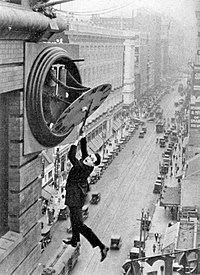
Of course, Lloyd himself did not climb the outside of any building. Insurance wouldn’t allow that, for a start. There was a stuntman who did the shots of the building, plus a carefully constructed set on top of other buildings to give the illusion of the climb.

Lloyd became associated with this kind of comedy, though others had done similar (eg Laurel and Hardy). He remade it, as “Feet First” in 1930, with sound.

Lloyd made more films and some are quite fun, but eventually he moved away and occupied himself wth other interests, especially photography.

“Safety Last!” is available on home media and is worth watching in its entirety.
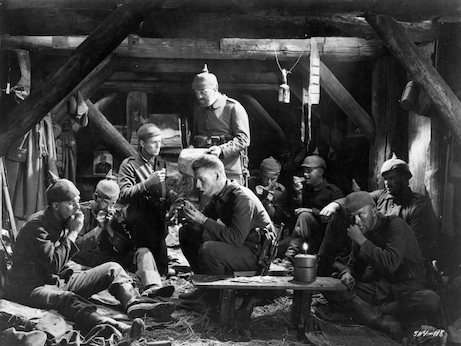
“All Quiet On The Western Front”

Released in 1930, I suppose in modern days it would be classed as an ‘epic’, with big scenes of warfare plus a human tale of sacrifice.

A few facts. It’s black and white, has sound, speech but minimal music, runs about two and a half hours, was also released in a silent version using a second camera at the time of shooting, and was re-made in 1979 in a more tv friendly, colour version.

The story is simple. The film follows a group of boys who are recruited to fight in a war for Germany. It shows the terrible conditions they suffer and the horrors of war and their ultimate deaths, while the families at home celebrate their heroism and say they should be proud to fight and die.

And, of course, it has that famous end.

There are many films that are described as “anti-war”. Some, like Kubrick’s “Full Metal Jacket” are not so clearly anti-war at all, but this certainly is. It is a harrowing tale with a grim end. At the time of release, some countries, eg parts of Australia, banned it for ‘pacifism’.

It does get shown in cinema clubs are there are good versions available on home media, as it comes up to its 100th anniversary.

Other films for your consideration I

I know people who will not watch a black and white film, ever. I know people who will not watch a film if it is foreign or silent because they won’t read subtitles or intertitles. These people are missing some great art.

From around the time of “City Lights”, still black and white (or maybe tinted of course) and silent, here are a few to look out for. It will probably have to be home media:

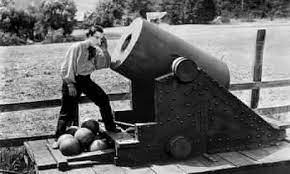
“The General” – Buster Keaton

A tale of love and trains set in the American Civil War and made in 1926, so relatively recent history for many people.

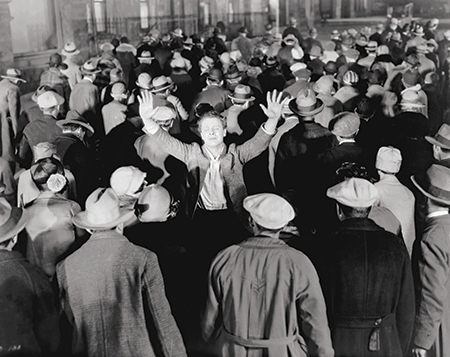
“The Crowd” – King Vidor

The story of ordinary people in a miserable world.

Not a happy tale.

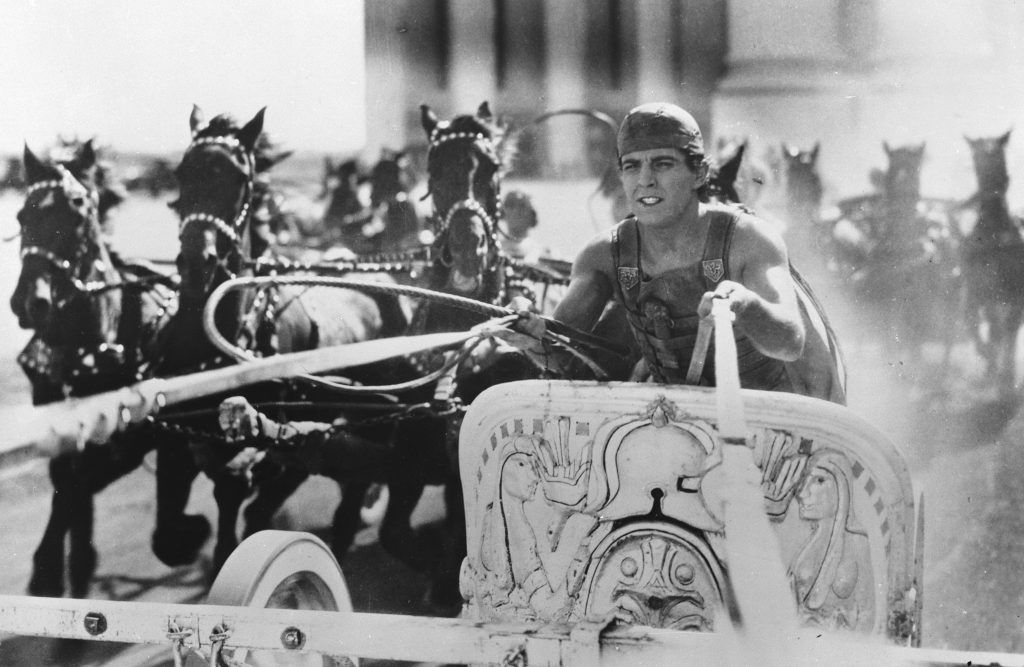
“Ben Hur” – Fred Niblo

Not the 1950s Charlton Heston piece, but the original 1925 version.

This is film most know for the exciting chariot race, but see the 1925 version. It is way more exciting, especially on the big screen.