“City Lights”

If you have not seen Chaplin’s film “City Lights” then you should. It is available on home media, but it does get show, rarely but it does, in cinemas, with an audience. It is one of Chaplin’s best films, maybe his very best and appears on top lists of the best films ever made. One list has it as the 11th best American film ever. Chaplin as the tramp in this film has appeared in “The 100 Greatest Performances of all Time” lists.

A few facts. It’s a black and white film, around 87 minutes, started production in 1928 and released in 1931. The film was silent in the sense that there is no recorded dialogue, there are still intertitles but there are synchronised sound effects and music. The music was mostly written by Chaplin.

Here is a summary of the plot. There are no spoilers, even for a film nearly 100 years old:

The tramp sleeps on the streets of the city. He encounters a girl selling flowers and realises she is blind.
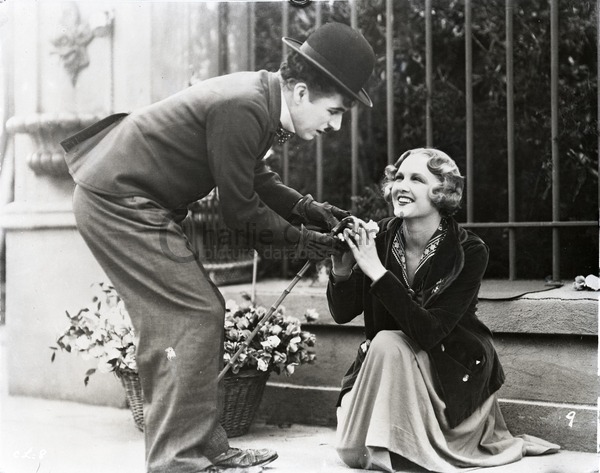
By an unfortunate set of sounds, a car door slamming, the girl thinks he is a rich person. The tramp falls for the girl and finds ways to get money so the girl can have a better lifestyle and, ultimately, an operation to restore her sight.
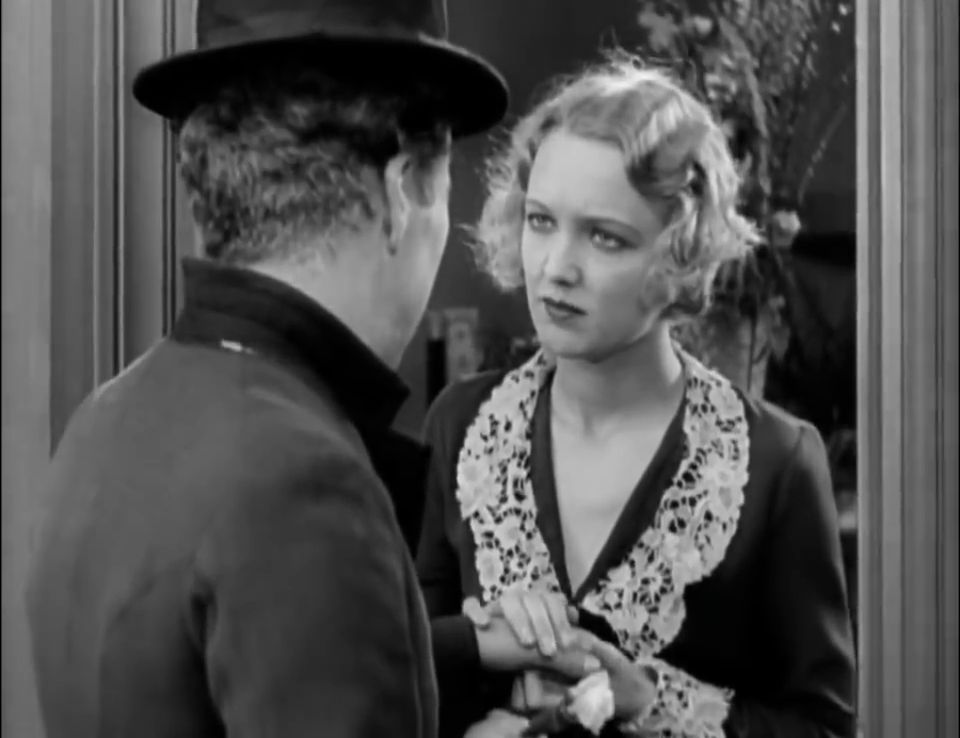
Ultimately, he finds himself in prison. When eventually he is released, months later, he returns to find the girl but she is gone.

If you want to know more, see the film. If you have seen the film, it will be clear that this was planned as a silent film from the start. Talking would destroy the poetry of many of the scenes.

A lot has been written or asked about the meaning of the film. Was the blind girl a representation of Chaplin’s real mother, the drunk his father, what city are we in and so on? Or is it just a simple tale with serious bits and funny bits and a love story at its heart?

The film has a long production history. It’s complicated. The “Unknown Chaplin” series covers much of it, the days, weeks shooting just one scene, crew and actresses being sacked and re-hired, Chaplin stuck and with no way to proceed. The DVDs for these documentaries are still available and poorer quality copies are on-line.

Some parts of the tale strain credulity. It is never explained what causes the girl’s blindness, or how the operation works, and how so quickly and without leaving any mark. The drunk’s amnesia is somewhat overdone, convenient and unbelievable, but apparently based somewhat in truth. And how had the tramp never seen the girl before?

At the start, for the unveiling of the statue, Chaplin distorts the sound, mocking sound movies and also the pomposity of the dignitaries as they reveal, well, a statue to what? The tram finds it suits his needs, as a bed.
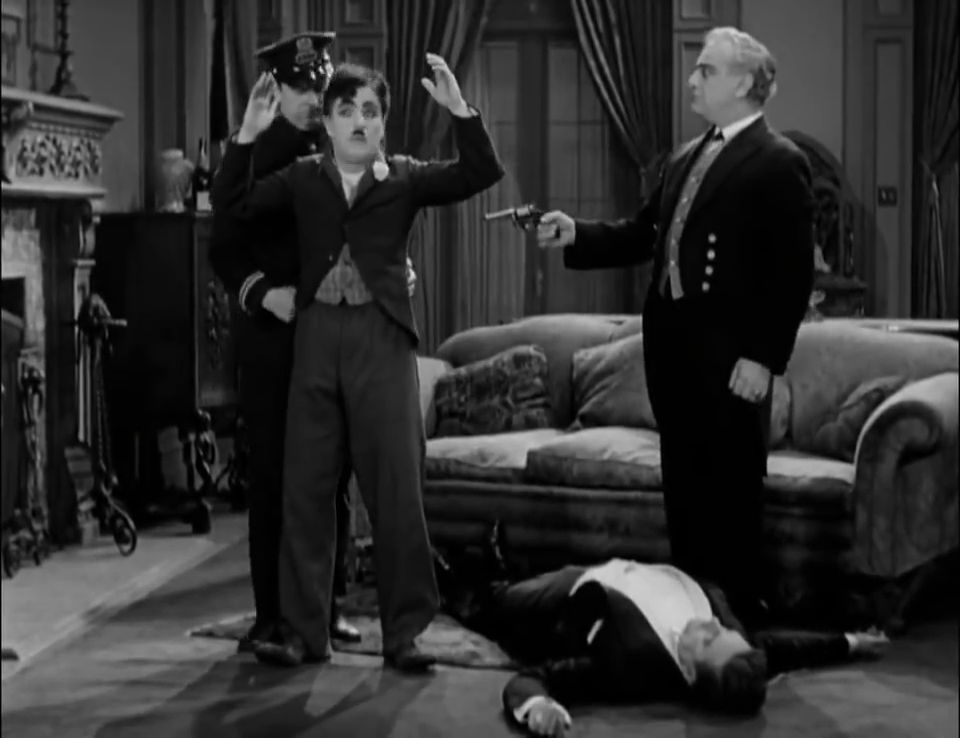
The boxing match is wonderful and hilarious. The scenes with the drunk go on too long and are boring after a while. They are there to serve the plot, of course, but could be cut.

Since we are doing no spoilers, the final part is not mentioned here, but, of course, it is a fantastic end to a film, perhaps one of the best ends to any film.
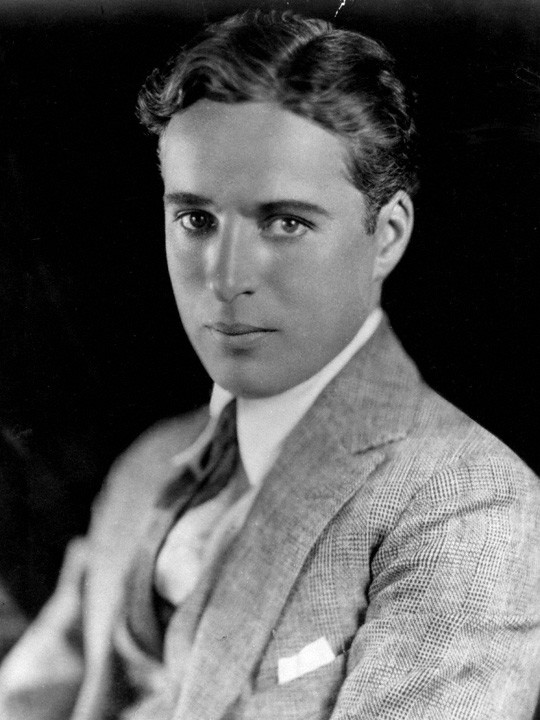
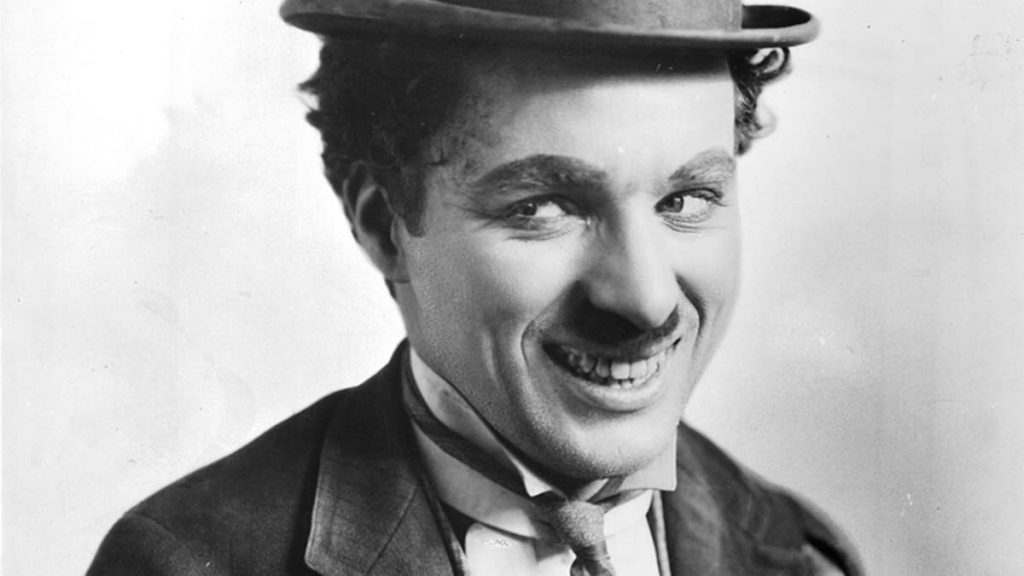
Chaplin

What do you know about Charlie Chaplin?

We were talking about this at the end of last year, around Xmas time. It was interesting to hear what other people said, apart from “who?” that is:

  • silent film star
  • slapstick
  • sentimental, maudlin
  • liked very young girls
  • had lots of wives and children
  • was a communist
  • wrote slushy tunes
  • not funny, never funny

Well, some bits of this are slightly true and some bits are just opinion, probably from people who had never seen a Chaplin film as it was intended to be seen, on a big screen in a cinema with an audience.

So let’s clarify a few things. There are good books, articles and even TV series about Chaplin, so this is not anything like even a partial biography.

Chaplin was born in a very poor area of south London in 1889. His parents split not long after. He was devoted to his mother, but she had serious mental problems. There’s no doubt Charles Chaplin had a tough childhood.

After a period working in theatres as a comedy actor, he went with Fred Karno’s army to the USA and eventually began a movie career. His short films were hugely popular around the world and Chaplin was possibly the most famous and recognisable person on the planet for a time, and very highly paid. The films were massively successful.

He formed the company United Artists with Mary Pickford and Douglas Fairbanks, and produced some of his greatest work, including “The Gold Rush”, “The Circus” and “City Lights”.

It has become popular to say Chaplin was not funny. Very many of his films had a very serious side, especially “The Kid”, where he drew on his difficult childhood. There are some wildly inventive and funny scenes, great story telling and if you ever get a chance to see some, do.

Admittedly, Chaplin liked to revisit his works over the years, re-edit them, add unnecessary commentary, none of which was an improvement. He made more political films, “Modern Times” and “The Great Dictator” which people did not like. After all, here was a movie star getting involved in world politics. He went into sound, and one theory says that he became less popular in the USA when they realised he had an English accent, a sarf Landan one even. Not even an American.

Well!!

The death of silence

Sound films were considered by so many to be a fad. They would last a while and then the industry would revert back to silent films with live music and effects. The studios wanted this – having to rebuild their studios to accommodate sound recording equipment was going to be expensive. Movie theatre owners did not want it either, again because of the expense.

Eventually, as we know, pre-recorded sound became a thing, forever.

It certainly had an effect on the industry. Musicians who had worked in cinemas were out of a job, or at least had to find new jobs. The soundtrack was on the film, or at least on discs synchronised with the film. The studio orchestra did all the playing that was necessary. Customers in any cinema around the world could hear the exact same musical score.

As far as actors and speech were concerned, many had to re-evaluate their futures. Some silent stars who had heavy accents either had to retire or move back to their country of origin.

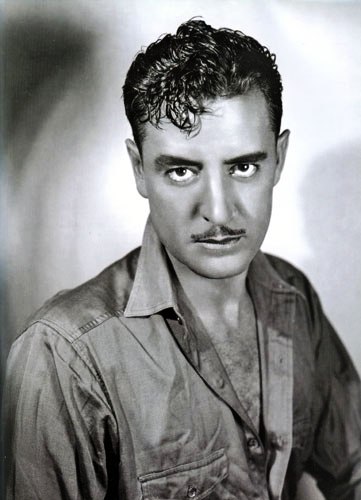
Voice coaches were employed for many. Again, “Singin’ In The Rain” shows this a little. Some stars continued but ultimately failed. A key example is John Gilbert who had been a huge star iin silents but, when he moved into talkies, the gossip was he had a terrible voice. It’s not true at all, he has a fine voice, it was just an opportunity for studio bosses to plot his ruin.

And, of course, stars like Garbo who had a heavy Scandinavian accent flourished. Her accent just added to her exotic air of mystery.

And what of comedians? Harold Lloyd continued into the sound era and created many more good films. Buster Keaton tried, but it didn’t work. Laurel and Hardy had been big silent stars, and became even bigger stars in the sound era.

Charlie Chaplin resisted. Remember that Charlie Chaplin at some point was one of the most famous and recognisable people in the world (especially in his tramp, or “little fellow”) guise. In 1931, when Chaplin released his masterpiece “City Lights” as a silent film with title cards and recorded music, the fact that there was no ‘talking’ was seen as an old-fashioned, unpopular and an out-of-step move.