
Eyes Wide Shut

You don’t often hear people saying nice things about Eyes Wide Shut, Kubrick’s last film.

Yes, it does have big names: Cruise and Kidman.

Yes, it was eagerly anticipated: this came out in 1999, and since Barry Lyndon in 1975, Kubrick had made just two films (Full Metal Jacket and The Shining).

Yes, Kubrick did die just days after its release.

Cruise plays a medical doctor who learns from his wife that she has had sexual fantasies and nearly had an affair. So he decides he’d like that, ambles round Islington, sorry New York City, not much happens and then they all go to Hamleys.

It’s a pretty unsubtle film in many ways. We saw it when it first came out and my companion remarked on the clunky photography, the unsubtle use of colours and the dodgy acting, Cruise especially.

Watching it recently to remind myself what it’s like, it’s a tough watch. What it means is not clear. There are reports of hundreds of takes of particular scenes, suggesting Kubrick was worse than ever and had no clue quite what he wanted to get.

Everyone was bored and dispirited by the end.

It’s hard to criticise, because it was Kubrick’s last film. Other Kubrick films were shortened or edited after release (eg The Shining and 2001) and maybe something would have been done to help this, but it’s unlikely it would have helped.

Some people have said the film as it is is a masterpiece. We’re not agreeing with that, but see it for yourself.

Posted in Films | Leave a comment

Spartacus

In the 1950s, cinema had a big rival. Rather than spend money to watch a movie, the new fangled television became the choice. Well, OK, it wasn’t new fangled, and it was a long time since 1927, but it (tv) became popular after the war.

People loved it. They could stay home, watch something mindless for ‘free’, not have to dress up and could even eat while it was on and be nude.

Cinema fought back. It’s the period when the gimmick hit Hollywood bigly. 3D was popular, Smell-O-Vision, vibrating seats, stereo sound…

The big push was to a larger screen. Many techniques were invented to fill the big screen: Cinerama, VistaVision, Todd-AO, Super Technirama 70 and so on.

But what for content? Well, so many produers and directors turned to the religious, quasi-religious or historic epic. Ben Hur, The Ten Commandments, King Of Kings, The Greatest Story Ever Told and more (into the 1960s).

Spartacus falls into this class. It’s set in Roman times, pretends to be a true story and is long. It was shot for the big screen. It is, as they say, an epic.

Kubrick was brought in by producer and star Kirk Douglas as the director. It’s a big starring vehicle for Douglas and his mate Tony Curtis. But there are real actors, like Laurence Olivier.

We are sure the set pieces look fantastic on a really big screen. And if you like that kind of historical stuff, maybe you will enjoy it. But boy is it boring. And at one point in its history, 23 minutes was removed, but this has been restored ish.

Kubrick tried his best to make something of it, but by all accounts hated it. It sticks out like a sore thumb in Kubrick’s filmography, and he would probably have made a better film if he had tackled it ten years later.

Posted in Films | Leave a comment

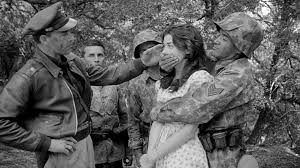
Fear and Desire/Killer’s Kiss

It’s hard to separate Kubrick’s first two films at the bottom of any list. They have a lot in common, black and white, barely an hour, variable photography and dodgy dubbed soundtrack.

Both have some points of interest, and if you are a Kubrick fan, you may want to watch them, but we don’t think they bear repeated viewing.

This is Kubrick working to a strict schedule and budget, a few tens of thousands of dollars. Killer’s Kiss is back on the boxing theme after an earlier short.

Neither was a box office success.

There are points of interest, it’s just a director learning his craft.

Posted in Films | Leave a comment