
2001: A Space Odyssey

We first saw 2001 at the Capitol cinema in Scarborough (now a bingo hall, we suspect) in what must have been a 35mm print. It didn’t make a lot of sense, but was impressive.

When we came to London, the Casino theatre, now the Prince Edward, was showing it as intended: huge screen, 70mm or similar print, surround sound, overture and interval. What a wonderful experience.

2001 got mixed reviews when it came out, but, over the years, has become regularly one of the ten best films ever made in many polls.

It is a true cinematic experience. There is dialogue, but mostly it’s inane, you know, normal. The story is told through the images. This is pure cinema.

You have to be impressed that there is no cgi here, so short cuts. But don’t judge the film by how it was made, judge it by what you see on the screen.

Digital scans have done this film no favours. There are big format film copies around. The BFI shows one sometimes, but it is scratched and broken with portions missing and is not great to watch. We have seen another with intrusive French subtitles.

The story? At it’s heart it’s another Kubrick war film. In the first section, the monolith appears to give one ape tribe an advantage over another. They learn how to make weapons and how to kill their enemies. War has begun.

Once we are in space, we see objects orbiting Earth. In some version of the film they were bombs. The Cold War continues: the American and Russian scientists have a very cold and wary conversation. The American scientist is evasive and lies to the Russians. And so on. In the Jupiter voyage section, HAL wages war on the humans.

It’s another film that was reduced in length after the first performances, and at some point there was supposed to be a prologue and narration, but that did not happen.

Posted in Films | Leave a comment

The Shining

Like so many Kubrick films, this was edited after release and some scenes removed, in some countries. Recent versions have restored some of these bits.

There has been so much written about this film, and we have very little new to add.

At the time, the photography, especially the use of the new fangled Steadicam, was something of a revelation.

The book on which it is based is pretty awful. The story does not make much sense, and many regard the film rather as Kubrick’s version of Kramer versus Kramer. We are documenting the collapse of a family by tv here.

The use of red, white and blue is unsubtle.

There are so many articles about the inconsistencies in the plot, but we just think that the shoot was so long that errors popped in and they really don’t have great significance.

Lots has been written about the multiple takes Kubrick used. This is all very interesting, but it’s what is on the screen that counts, not all the other guff.

Posted in Films | Leave a comment

Barry Lyndon

Kubrick loved the cinema. He wanted his films to be seen on the big screen under the best possible conditions: good sound, a clean and intact print, comfortable chairs…

To that end he had spies out checking on showings and making notes to report back (I know, I sat next to one once).

We wonder what he would have thought of the current state of yer average multiplex: they are expensive, projection quality is often poor, sound can be tinny and the digital projection is lacking. There is no replacement for actual film.

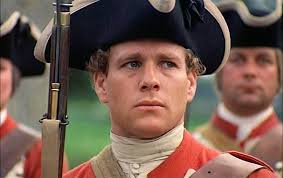
Barry Lyndon is an historical epic. It covers, over three hours, the efforts of an Irish country bumpkin who wants money and power and a title.

Visually, it’s a stunning film. It’s slow, to give you time to take in the scenes, and often pulls back revealing more.

There’s Kubrick’s beloved narration. Episodes from the book on which it is based are removed.

There are some stunning performances, especially Murray Melvin as Runt.

And the music reflects the story so well.

And then… there’s some duff acting. Ryan O’Neal is presumably doing what his director asked, but the accent varies and the actor seems a bit, er, distracted. A big name star here does not work. And Leon Vitali as the older step-son is another negative.

Despite some negatives, it’s a film to be seen. There’s no cgi here, no electronic score, just decent, honest, old-fashioned film making. It wasn’t a box office success at the time, and, while so many Kubrick titles are available on 4K for home viewing, Barry Lyndon is not. Maybe the medium can’t do it justice. Maybe there’s no market for it, and we can make do with a bluray.

Barry wants money and power and respect, regardless of who he has to walk over and however badly he treats his wife. Perfect for our Trumpian times.

Posted in Films | 1 Comment