For those who are just joining us, let us explain what we are doing here.
The idea was to provide, at a rate of roughly one per week, on a Sunday, a hint about some of our most watched films, as a suggestion for something you might watch.
They are not always the greatest films ever, and we have tried to avoid the more obvious things because they are more obvious.
There’s basic information about the film, a brief summary of the story with no spoilers and some hint at why we enjoy it, why it is worthy of your attention.
There are no long-winded reviews, just a suggestion, a picture or two and an idea why you might watch it.
Do comment, if you wish.
Posted inFilms|Comments Off on What are we doing here?
Often considered as one of the greatest of film noir movies (in some lists, in the top thirty movies of all time), “Double Indemnity” was directed by Billy Wilder with script by him and Raymond Chandler.
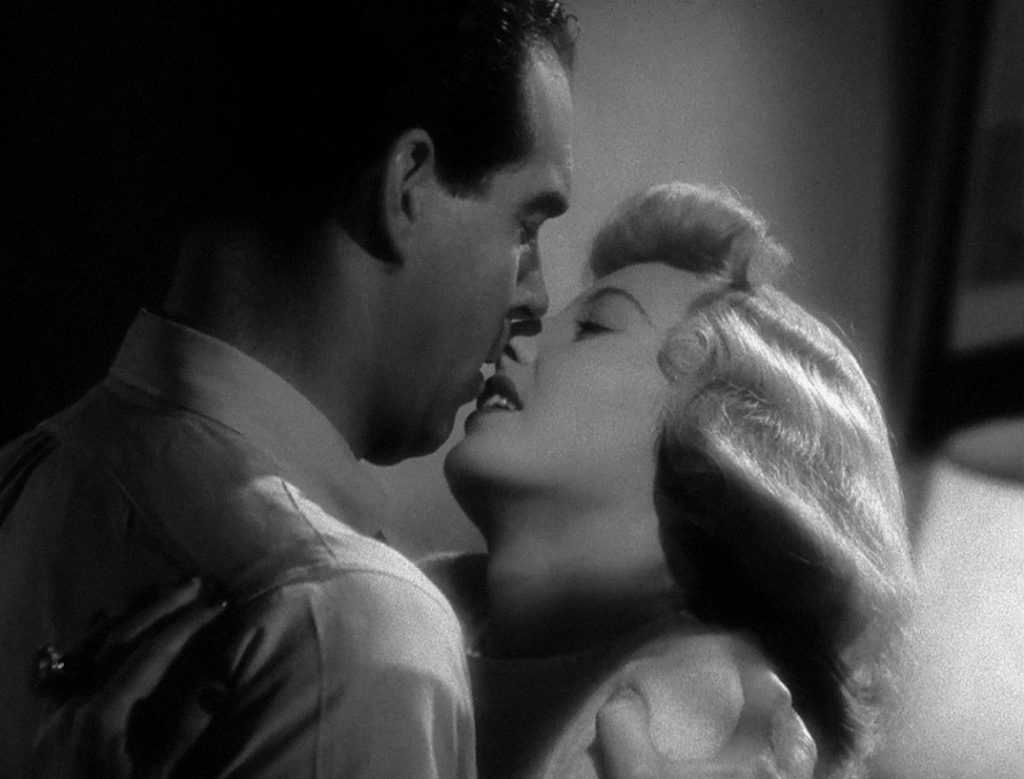
If you don’t know the story, here is a brief summary (no spoliers). Walter Neff is an insurance salesman. He calls at the Dietrichson house to see Mr D to sell him some insurance, but Mr D is out and Walter meets Mrs D and falls in love, or rather lust. Walter and Mrs D (Phyllis) hatch a plot to kill Mr D, take his insurance money and have a new life together.
Fred MacMurray and Barbara Stanwyck star.
It’s a carefully plotted film, from a James M Cain novel which Chandler had analysed and improved on, solving all the technical issues. The end is inevitable from the very beginning. Walter seems caught up in a mess he instigated but is then out of control of.
It fair crackles with Chandler dialogue, especially at the beginning. The black and white photography is stunning when seen on a big screen.
And yes, it is a murder mystery, but also a love story. But not between Walter and Phyllis.
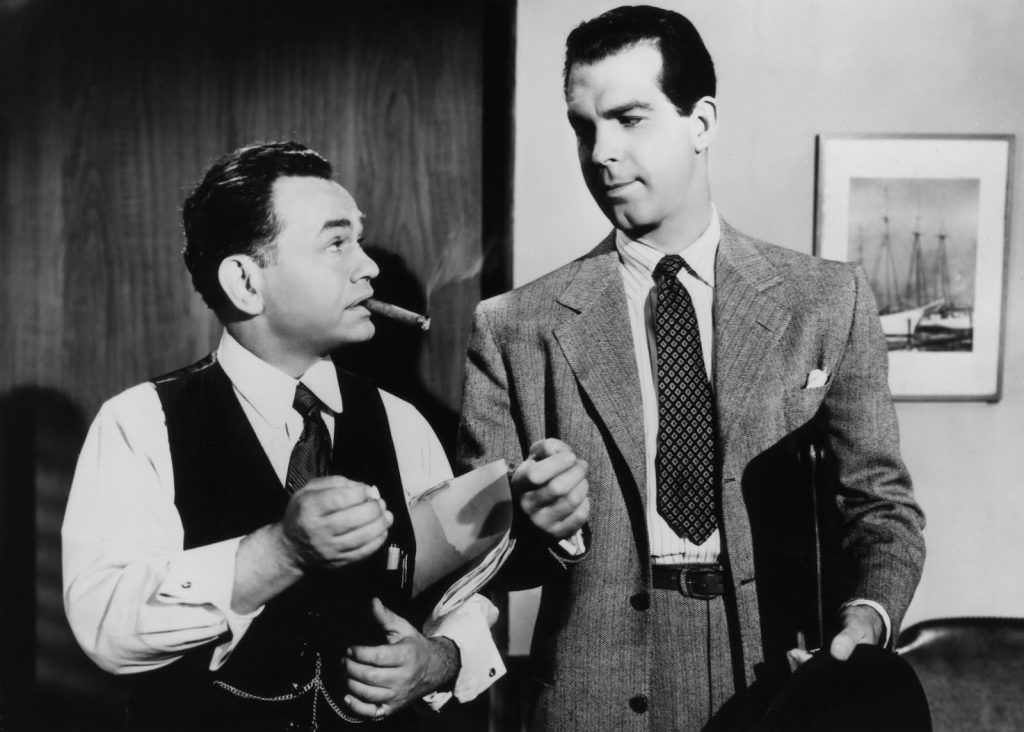
Star of this show is Edward G Robinson, in one of his greatest roles, insurance investigator Barton Keyes. Walter and Keyes love each other like father and son. At the end, Keyes disappointment in Walter’s actions are clear. He is brokenhearted.
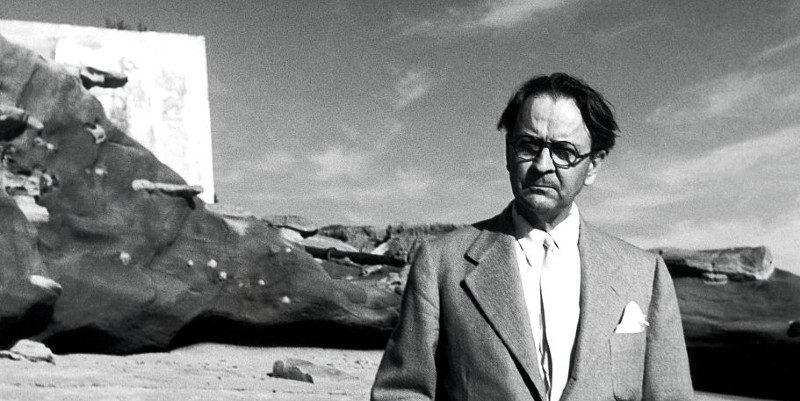
Oh, and watch for the only known clip of Raymond Chandler, sitting on a chair in the insurance offices.
There has been at least one re-make, and the film “Body Heat” follows similar lines, but looks dated.
I first got interested in the books of Raymond Chandler in the late 1970s when the BBC broadcast a sereis of plays based on his books with Ed Bishop (Captain Blue, Ed Straker etc) as Marlowe.
The radio plays were, and still are great. The Irish playwright Bill Morrison simplified the stories (he had to) but kept much of the Chandlerese from the books. They were re-made but are not as atmospheric.
Chandler was not a prolific author, and all his long novels have been adapted into feature films. These are the main ones:
“The Big Sleep” (Humphrey Bogart 1946 and Robert Mitchum 1978)
“Farewell, My Lovely” (Dick Powell 1944 and Robert Mitchum 1975)
“The High Window” (as “The Brasher Dubloon”, George Montgomery 1947)
“The Lady In The Lake” (Robert Montgomery [sort of] 1947)
“The Little Sister” (as “Marlowe”, James Garner 1969)
“The Long Goodbye” (Elliott Gould 1973)
The book “Playback”, Chandler’s last big work (ie not a short story, more a novella), was intended as a film but has never made it. It’s a rather incomplete book. Also, “Poodle Springs” was unfinished at Chandler’s death. Robert B Parker did attempt to finish it, and it has been a radio play and a HBO presentation, but is a minor work.
Chandler was a very different kind of author from, for example, Hammett. Hammett’s stories read like film screenplays already. Watch “The Maltese Falcon” and it is very close to the book. But Chandler was more academic and more ‘literature’, at least partly from having had an English public school education.
Chandler was behind many film scripts. He was involved in Hitchcock’s “Strangers On A Train”, 1951, though the less said about that the better. He wrote an original script for “The Blue Dahlia”, 1946, although it was altered at the last minute, against his wishes, as it could not be seen for an ex-service man to be a killer (the original and intended end).
And, of course, he co-wrote one of the great films of all time…