Sing it big

Ask someone for their favourite film musical and they may well say “The Wizard Of Oz” or “Singin’ In The Rain”. These films are in what is called Academy Ratio, basically 4:3 (so for every 3 metres up the screen goes 4 across.

With wide screen/big screen formats becoming common in the 1950s, religious/historical films were an obvious topic (eg “Ben Hur”, “Spartacus”, “The Ten Commandments”). Westerns too.

Also ripe for making were musicals, usually classic musicals made for the very big screen.

Here’s a list of just a few. You can look up the different processes if you like:

  • VistaVision (“High Society”, “White Christmas”, “Funny Face”, “King Creole”)
  • Cinemascope (“Carousel”, “The King And I”, “A Star Is Born”, “Guys and Dolls”)
  • Todd-AO (“Oklahoma!”, “The Sound Of Music”, “Porgy And Bess”)
  • Super Panavision 70 (“My Fair Lady”, “West Side Story”, “Chitty Chitty Bang Bang”)

And let’s not forget “Kiss Me Kate” in 3D. And yes, we do know “Chitty Chitty Bang Bang” and “The Sound Of Music” are the 1960s.
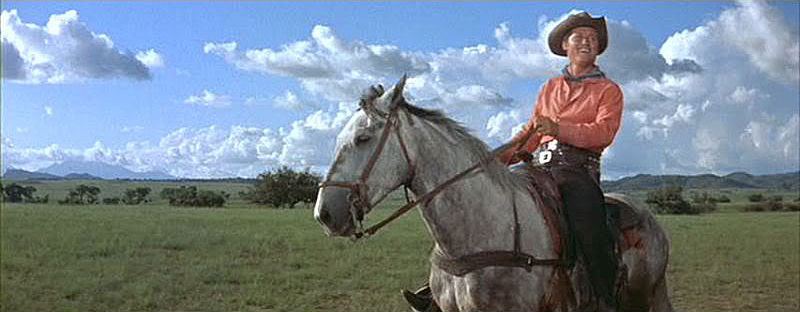
Musicals also benefited from multi-track hi-fidelity sound recording.

It’s very hard to see these films on a big screen from an actual print these days. They mostly have been scanned and manipulated and the experience is not the same. Watching on tv, even the wide, big screen sets we have now, loses the impact.

Of course, by the 1960s, musiclas were losing their appeal. Ever seen “Finian’s Rainbow”? “Camelot”? Probably not.
Posted in Films | Comments Off on Sing it big

“High Noon”

We wanted to include a western. If you watch some of the cheap cable channels, they show some very ordinary old westerns and are best avoided. But there are some, a few great movies.

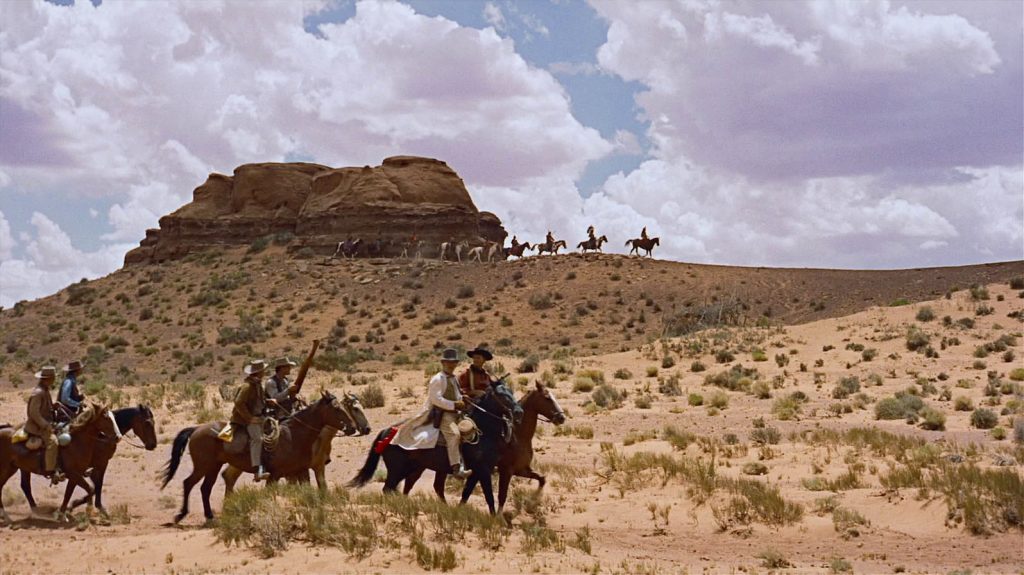
“The Searchers”, starring John Wayne, is one such. It is a true epic, and one of the first films we got on bluray. It’s filmed in VistaVision.

Here is a brief summary of the plot of this 1956 film: Ethan Edwards returns to his family. The family have their cattle stolen, while Edwards is away the family home is destroyed, the family killed but the young daughters are abducted, all by the Indians. Edwards sets out on a pursuit to find the missing girls.

If you have seen the tv series Hollywood you will know something of the background to the making of this film.

It’s a movie that looks great on the big screen, like those paintings by Remington, but has some controversial themes. The Indians are depicted as thoroughly evil, and Wayne’s character is a loner and racist. When he discovers Debbie (Natalie Wood) has become Indian, has probably been raped and more, he determines to kill her.

Anyway, enough of that.

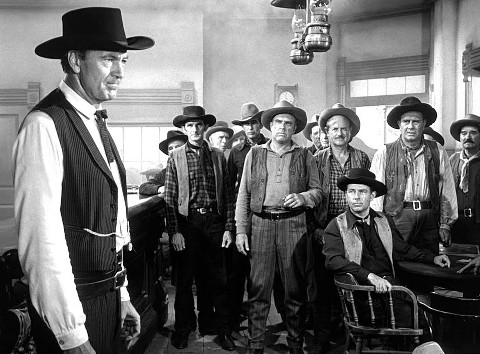
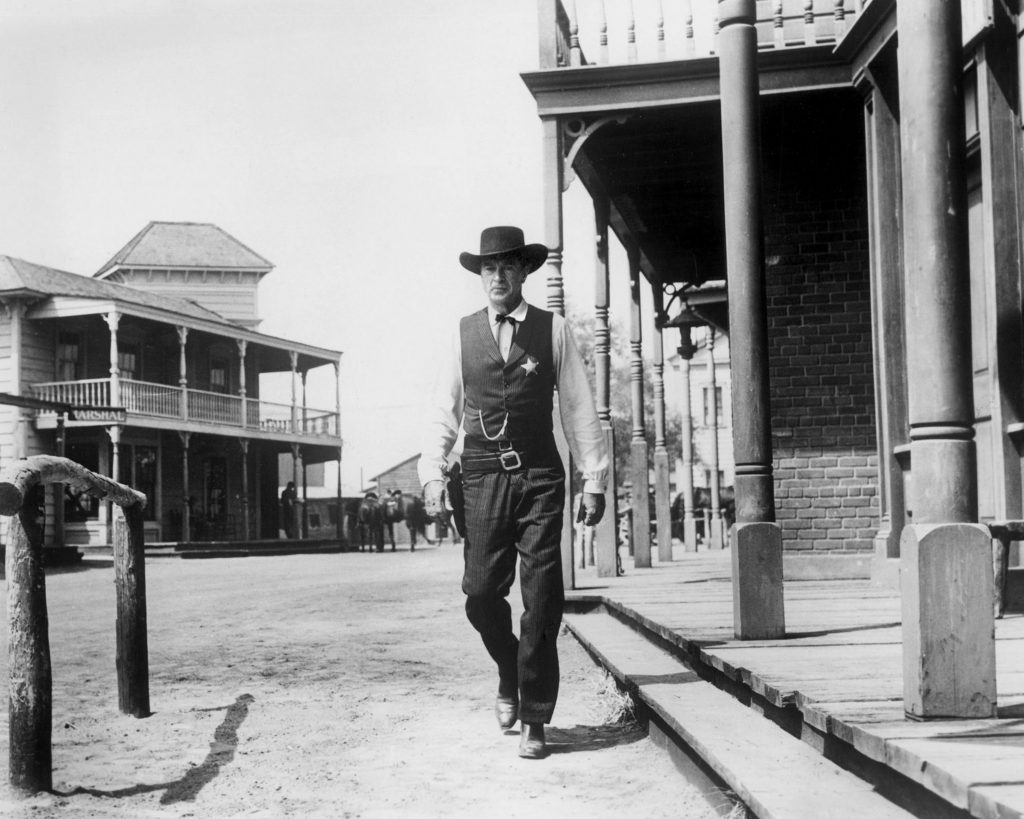
Our actual choice is “High Noon”, Gary Cooper and Grace Kelly, directed by Stanley Kramer from 1952.

Cooper plays Kane, a retiring marshall, just married (Kelly). His wife is a Quaker and therefore a pacifist. Kane learns that a criminal he sent to jail is arriving at noon to join his gang and seek revenge. Wife Amy is leaving on the noon train with or without Kane, definitely without him if he engages in a shoot out with the gang.

There are several aspects of the film that make it memorable. There’s a wonderful music score, clever direction, an understated performance by Cooper and the film pretends to be in real time. Clocks feature a lot and a minute of film time is supposed to be a minute of real time. More or less.

John Wayne hated it. He is quoted as saying “[it’s] the most un-American thing I’ve ever seen in my whole life”. I imagine Trump would hate it too. It undermines the historical view of “the wild west”, much as Altman’s “McCabe And Mrs Miller” does. Kane is the strong silent type and only turns to violence when he has no choice.

You can read it as a commentary on the House Committee on Un-American Activities that were going on at the time. Or you can just watch it as a celebration of the individual against the mobs.

Posted in Films | Comments Off on “High Noon”

“Monsieur Hulot’s Holiday”

Or, more correctly, “Les Vacances de Monsieur Hulot”.

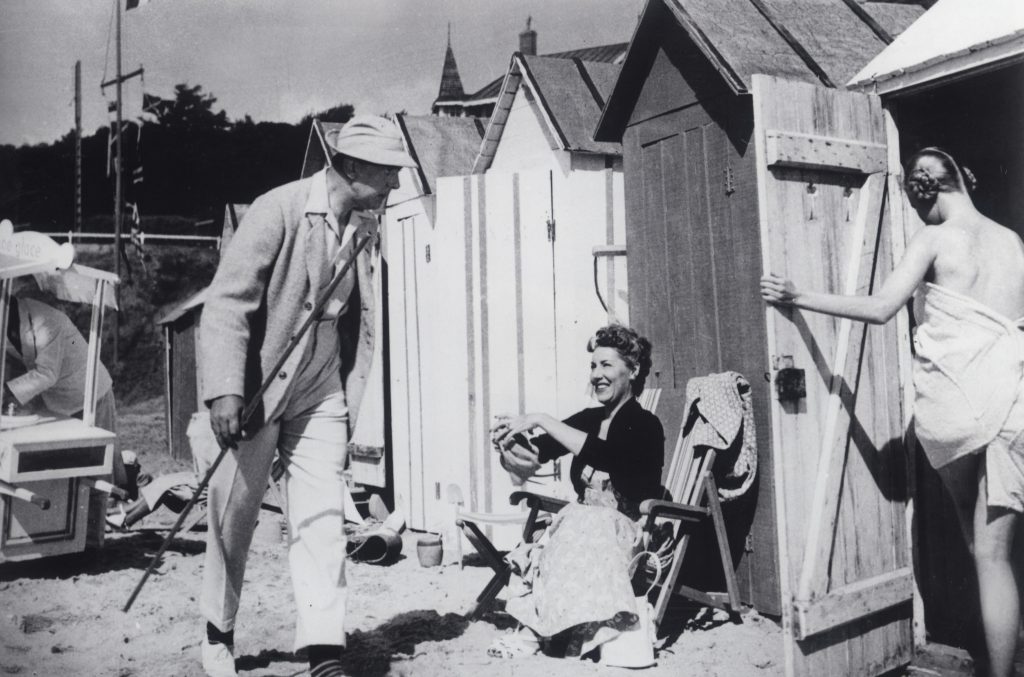
Jacques Tati, the French film maker and script writer, made this wonderful film and it was released to the world in 1953.

Many of Tati’s films make use of the big screen. “Playtime”, for example, was shot using the 70mm film format. Very often, the camera is static and events just evolve.

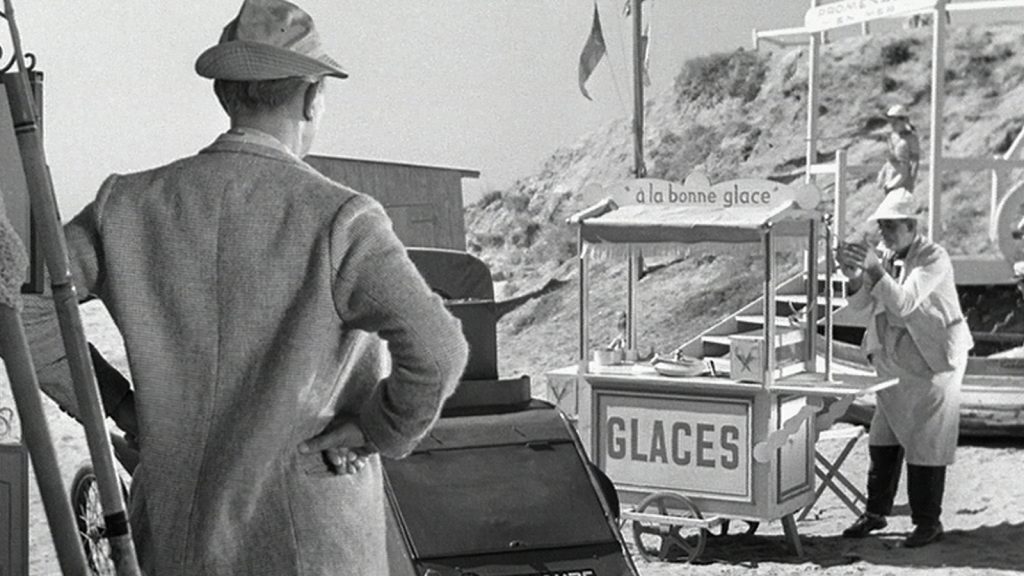
Everything in this film has a noise, and the car is a star.

Tati revisited the film several times over the years, fine tuning it, andd there are different versions available. There’s a Tati box set with at least two versions on.

This film follows Tati’s character Hulot as he goes on holiday to the seaside. Disasters happen.

It’s a very French film, of course, and pokes fun at a number of French political types and at French life.

The dialogue, such as it is, is deliberately matter-of-fact. It is a delightful film with some genuinely funny moments, and worth finding on bluray. It bears repeated viewing.

Tati revisited the character, but really wanted to move on. I often think that the Tony Hancock film “The Punch And Judy Man” was his attempt to make a British version of “Holiday”, with all the grimness of the English seaside.

Posted in Films | Comments Off on “Monsieur Hulot’s Holiday”