One of the newer stations on the London Underground is Battersea Power Station. It’s at the end of the Northern line, and was built to serve the new shopping complex inside the old power station and all the new housing surrounding it.
The name of the station is Battersea Power Station. So, when referring to it as a stop, it should be Battersea Power Station station, just like Archway is Archway station.
But it isn’t, it’s Battersea Power station, or Station.
The railway lines that come to the capital usually stop at one of the terminus stations. Their names are preceeded by “London”, just in case you thought you were in Paris, so London Victoria or London Charing Cross.
But not London Bridge, which should be referred to as London London Bridge.
I was passing through Euston station in London the other day, as you do, and a lady stopped me to ask for directions. She wanted to know where to get a taxi to King’s Cross station.
I helped her. I must have the air of someone who knows how to get around as I am often asked for directions.
That bit of Euston Road has three main railway stations, Euston, St Pancras and King’s Cross. the latter two are literally next door to each other and could be a single station but for a busy and dangerous main road between them.
From Euston to there is maybe five minutes walking, perhaps a little longer. It’s actually signposted at the station. You see people doing it all the time.
I undertsand there are many reasons why someone may choose to take a taxi for such a short distance: they don’t know it’s so close, they have mobility issues, heavy bags, naughty children in tow, in a hurry or maybe they just can’t be bothered/someone else is paying so why not? Add your own reasons.
The traffic on the main road is slow. Taxi may not be the fastest, depending on queues for cabs and congestion.
Bus is also an option. If you are just passing through, you may not know what bus to get (91, 390, 73 and so on), you perhaps won’t have an Oyster card but could use contactless, may need a receipt and many of the issues above could still apply.
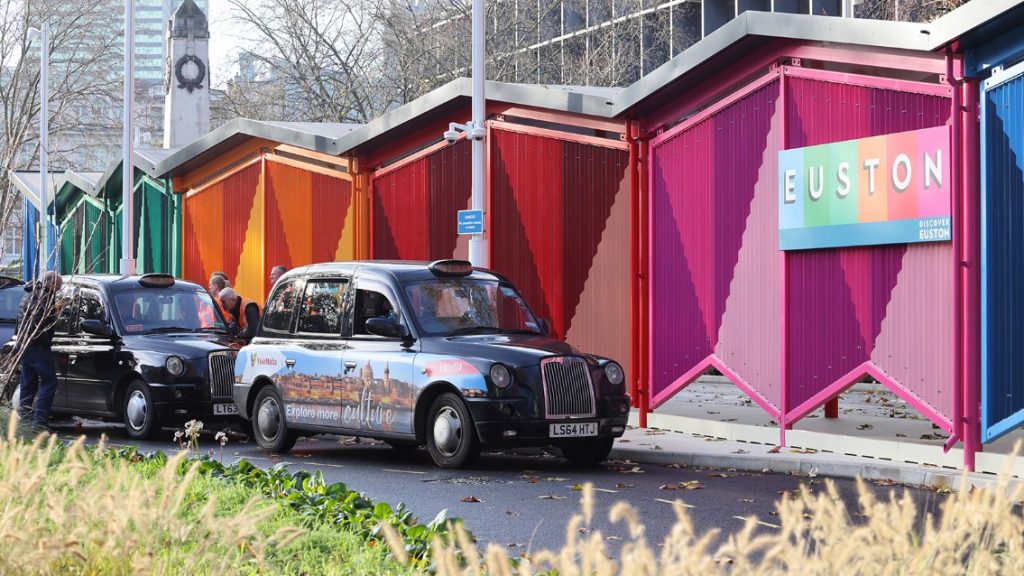
Finding the taxi rank at Euston is not easy. The whole general area is a building site. Just getting into a taxi costs you nearly £5, plus mileage and time, so it’s an expensive option for a short journey.
I told the lady that it was walking distance, just so she knew and could consider it, but pointed to where the rank was, over the bus station, and how to cross the roads safely, which she did.
If you are visiting somewhere, even just passing through, taking a few minutes beforehand to study the geography may really help. We’ve written before about knowing where places are and organising yourself to make the best use of your time. It’s not just for London, but any place you may care to visit. Having an idea of scale really helps. Knowing whether places are north, south, east or whatever is good. There are plenty of free apps to help.
I’m not saying the lady in question didn’t know at all, and I was happy to help, but it still made me think.
London is busy with visitors, as you might expect. On our travels we have overheard people complaining they were at a bus stop and the bus came but did not stop, or simply did not come.
We’ve talked about this before, but here are some reasons why the bus may not stop, and what you can do about it:
It’s the wrong bus stop
Not all buses stop at all stops.
Look at the top of the bus sign and the routes served will be shown. Any route not listed will never stop there.
Look around for another stop which has the correct route on.
The stop is out of service
Manybe the road is being worked on and stopping a bus would be dangerous or cause a traffic jam.
Often there are temporary stops nearby.
On a similar note, if the bus is not appearing it may be diverted, because of roadworks or some event. Travel apps should highlight this.
Full
A bus will not stop if it is full and no-one wants to get off.
Even if it is full and stops and someone gets off, more people may not be allowed on. The space may still be too limited.
Look for another bus close behind that is probably half empty.
Out of service
A bus will not stop if it is going home to bed. Even if it shows the right number, it should say “Out Of Service” or similar.
Compulsory or request
There are two types of stop, compulsory and request. The meanings for these should be obvious.
When COVID/lockdown happened, buses still ran but stops became all Request stops. Buses would not stop unless you waved at them or rang the bell.
This seems to have continued and most drivers regard all stops as request.
If you are standing on the pavement and see your bus approaching, raise your arm so the driver can see you need it to stop. Give the driver plenty of time to react. If you are on the bus, press the bell once in good time (provided no-one else has already pressed it).
End of the line
If you are at the last stop on the route, the bus may stop to let the last passengers off but no-one can join. Look on the bus stop sign to see what direction buses are heading. You are probably on the wrong side of the road.
This can also happen in the middle of a route as it is possible that not all buses cover the entire route. A bus may be stopped short, so, while the route continues, and individual bus may not. Wait for the next bus which may not be far behind.
The destination of a bus may change while it is en route, eg for bad traffic conditions.