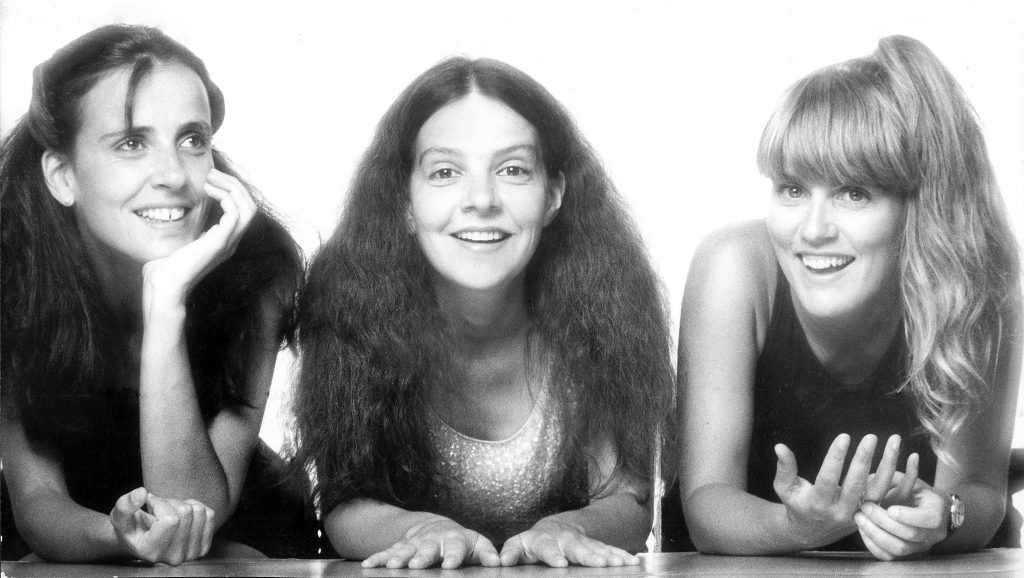
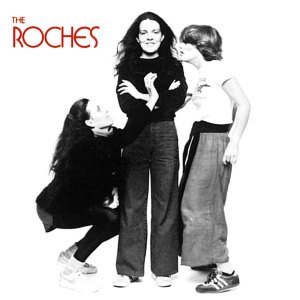
We first got into The Roches when we heard Robert Fripp had produced their first album and was up for awards for it.
This band of three sisters, Suzzy, Maggie and Terre, had been producing music separately and in various combinations, but their first album, from 1979, gathered a lot of interest.
The ladies sing three part harmony and play guitar and occasional keyboards. Assisting on this album were Fripp, Tony Levin, Larry Fast and others. The production was in Audio Verite, in other words, simple and direct with the minimun of overdubs and even the odd bum note.
It was a well-received disc and is definitely worth finding. Many of their best songs appear here.
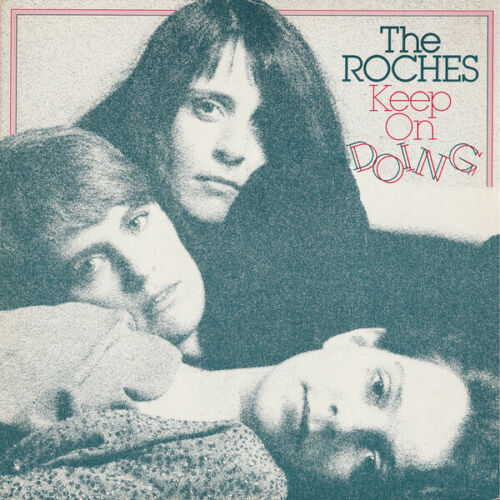
The second album, Nurds, 1980, was somewhat different, then they returned to Fripp for Keep On Doing from 1982.
The Eurovision Song Contest is here in the UK. The main events, semi-finals and final, plus the other shows, happen in mid-May.
Th UK did not win last year, we came second. The Ukraine song won, for many reasons, but putting on a show there has its problems right now, so UK stepped in to host by proxy. Let’s not forget though, it’s Ukraine’s show.
The last time UK won was Katrina and the Waves, 1997. This is still one of the great ESC songs.
The BBC’s attitude has always been, it’s stupid, silly, meaningless and rather nasty and expensive crap. UK entries have been poor, or worse. And oh those foreigners… how funny they are.
The commentators the Beeb employs have always taken this line. Terry Wogan and, more recently, Graham Norton will say nasty things about any song. They make rude remarks about performers, talk over the songs and play the ‘politics’ line when other countries don’t give UK full points. They will back UK even when it is dismal beyond belief, because UK is best full stop. Brexit has been alive and well here for so long…
But the ESC is the most watched non-sport show on tv. Only The Super Bowl gets more.
But there is a lot of enthusiasm for ESC here, genuine enthusiasm. The events are being held in Liverpool, home of such pop legends as The Beatles and Ken Dodd. The venue holds roughly 11,000 people, but reconfiguring the stage and pre-allocation of seats means it is down to 6,000 or so, less than the Royal Albert Hall.
Tickets were hard to get, well no, impossible, partly because there were so few, partly because the system was just overloaded, and mainly because of the touts. Had the venue been larger, say the O2 Arena or similar that can hold 20,000 easily, they would have sold out, made more money and given more people a chance to enjoy this event. But they didn’t…
Now they are suggesting you watch it at your local cinema, if they carry it, at a cost, of course. This is targeted at groups – individuals are discouraged and would feel very out of place anyway. Fancy dress is expected. At the time of writing, we see no rules about booze, but the guess is booze will be available at a cost, a high cost, but your own will be confiscated.
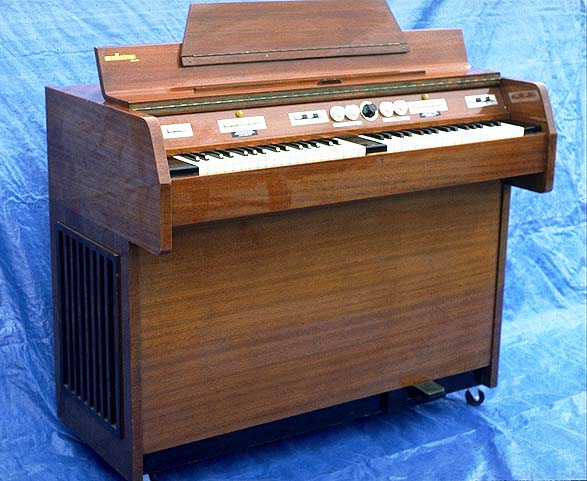
Fans of prog rock of a certain vintage will know what a Mellotron is. It figures in music by The Moody Blues, King Crimson, PFM, Pavlov’s Dog, The Beatles, Barclay James Harvest, Electric Light Orchestra, Yes, Pink Floyd…
Look, there’s a huge list. Have a look at this fantastic site, Planet Mellotron, to see more.
Many people say the Mellotron is an early form of sampler. It works by having a rack of pre-recorded tapes of a real instrument (or group of instruments or voices), each tape with a specific note, activated by pressing a key on a keyboard.
In fact, each piece of tape can hold three different instruments and you can select between them, or combine them. Each tape lasts roughly 8 seconds. It’s a purely mechanical, analogue device.
As you can imagine, the Mellotron is a pretty large and rather heavy instrument. Later ones had one keyboard, early ones had two, for rhythm/accompaniment and one for the tune.
There are lots of clips of the Mellotron in action, but we like this original clip with magician David Nixon.
It has a sound all of its own, something even modern emulators don’t quite capture.