
Summer

You can tell it’s summer here in London. It’s as cold and wet as ever, but there are more foreign tourists around.

They, you, are generally welcome of course, to share our great city.

There are plenty of tourist guides about London. There are guided tours and bus tours and helpful websites and YouTube videos…. plenty of people helping you to find interesting things and help you get the most from your trip.

I have lived in London for more than 37 years, and I suppose I know a good amount about the place. So I watch these videos and think, is this my city they are talking about? I once even considered creating a website myself of practical information, and started it, but the amount of work keeping it up to date was just too much for no gain, just complaints, so I removed it.
So, occasionally, I will post what I hope will be hopeful, realistic tips and correct information to help you. And if you have a specific question, ask.

I’m not going to recommend things to do. What you enjoy is very personal. But, I am going to correct things people have said about London, and warn you about things you should definitely not do, or expect.
Snap

I worked in a camera shop for five years. It was seasonal work, by the seaside during the summer. This was the 1970s.

We sold what I would call analogue equipment, cameras with films, not digital, and on a sunny day we could be so busy. One year we had an actual shortage of film stock.

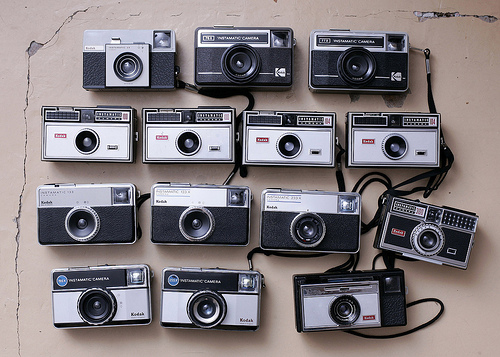
People on the beach would take snaps. The most popular cameras were Instamatic 126 film. The film comes in a plastic cassette with one big end and one small. Drop it in the camera, close the back, wind on to picture one, where it would lock, and get snapping.

Films were 12 or 20 exposures. You would ask the customer, 12 or 20, black and white or colour, Kodak or Agfa? 12 colour was 68p, 20 cost 81p. Prints were square, hardly ideal.

It was a pretty simple system, but there were still people who wanted you to load the film for them. Memories of roll film, I suppose.

The cameras were usually fixed focus, meaning anything from a few feet to infinity would be reasonably sharp. Mostly the cameras were mechanical, you wound on to the next shot by hand. Flash was usually a cube on top of the camera. It held four bulbs and was usually pretty useless. No that’s not fair, let’s say people expected it to do more than it could.

The biggest problem was the beach. Sand would get into the camera and block the locking mechanism, so the film would just wind through. We found a simple fix: bang it on the shop counter. Not a complete fix, only a complete clean would do that, but it did.

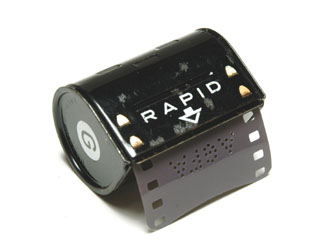
There were alternative systems. Agfa had one called the Rapid.

It was never a huge success, and the method never quite convinced that it was reliable, so you could open the back to find unused film.

Kodak also brought out the 110 system, a micro 126, but the picture quality was rubbish.