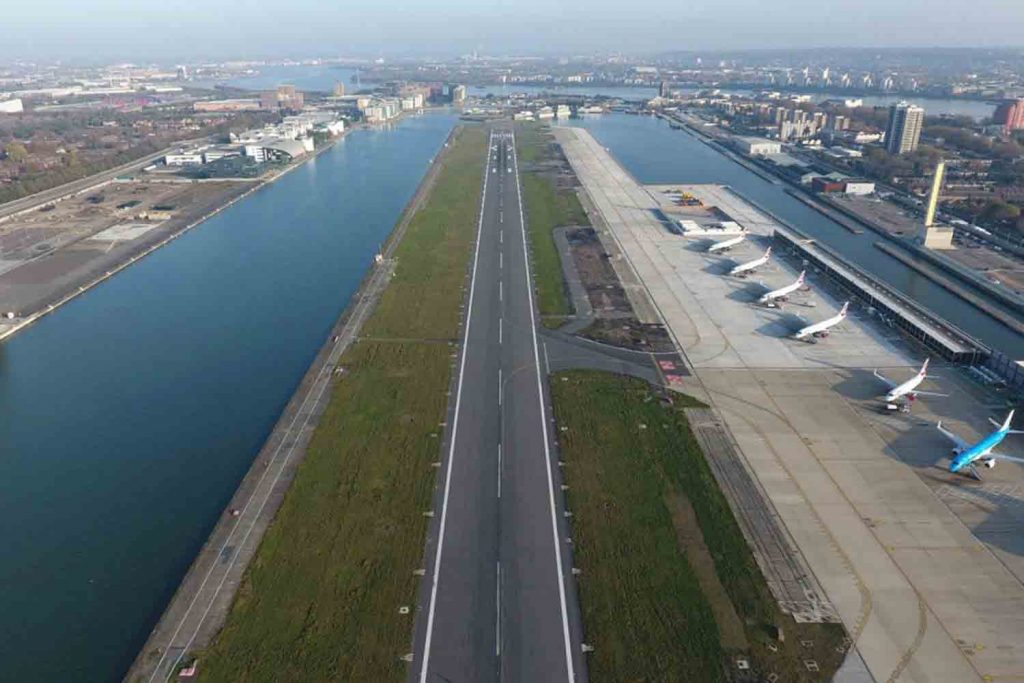
London City is in the Docklands area to the east of central London. It is the smallest of London’s airports, and about 6 miles out.
Train
No trains.
Underground/Docklands Light Rail
There are many DLR and some tube stations in the area. Canning Town is possibly the nearest, with a short walk. Last time we went it was signposted, but a bit confusing. Royal Albert may be a better choice.
The DLR can get you towards London, to Bank (for connections to the Central and Northern lines) or Tower Gateway (for Circle and District tube lines). There are connections to Docklands, Greenwich, Stratford…
Taxi
Because it is so close to London, taxi and car service are real possibilities, especially if you have a small group of people. From maybe £50 is reasonable.
Bus
Because it is so close, red bus services are available.
It’s slower, and you may need to change, but there are routes like the 473 that are a short walk away.
Getting to central London only by red bus may be fun, but it’s slow and requires multiple changes.