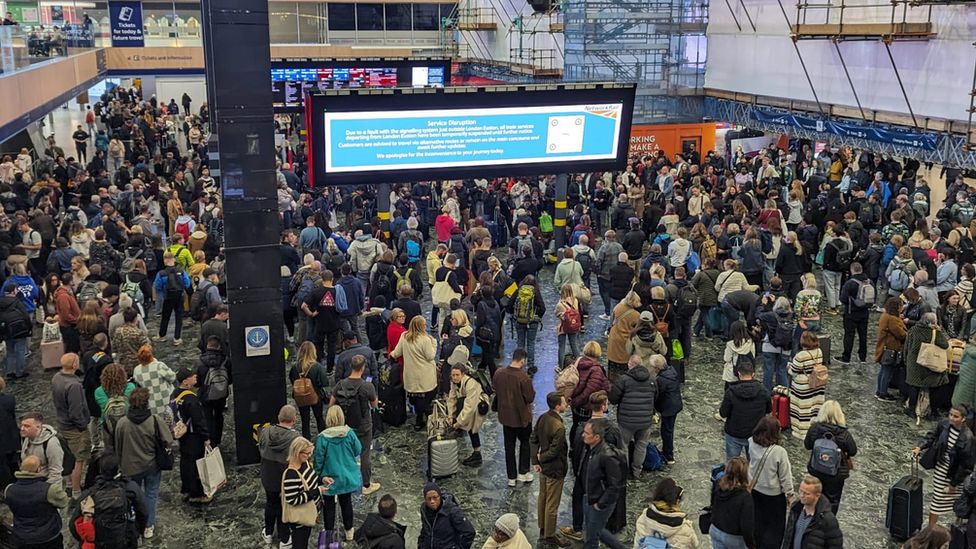
I think it’s probably fair to say that very many people find Euston a horrible, miserable depressing station. It is not one you want to spend time in.
For some considerable time it has been a building site. It is often closed at weekends. As a passenger it can be confusing.
It can also be very busy.
If you are arriving at Euston, you have perhaps come from Scotland, Glasgow perhaps, or stations down the west side of England, eg Liverpool, Manchester, Birmingham.
The whole area is pretty grim and unpleasant.
Underground
To get to the Underground, at the time of writing you have to go out of the front of the station, turn right and then right again to go back in and down. Last time we were there it was closed and people were queuing because it was so busy.
Euston is served by the Victoria line, towards Oxford Circus, and two branches of the Northern line, to Bank, Leicester Square or Charing Cross.
If you cross the busy Euston Road, it is a short walk to Euston Square, which will take you to Hammersmith in the west and Liverpool Street to the east.
Buses
If you come out of the station and walk straight ahead there are some narrow and smelly paths that lead to a bus station. Here you can get so many buses, mainly going east but not all, too many to list.
Some of the buses go from across the main road, and there are multiple bus stops so it is confusing.
If you want to get to Trafalgar Square, for example, you need to get a 91 bus from near the Prezzo restaurant.
Taxis
The station is quite centrally placed and north of the main bits of London. There are many hotels nearby.
Getting to your accommodation may be best, and most sensible, by taxi.
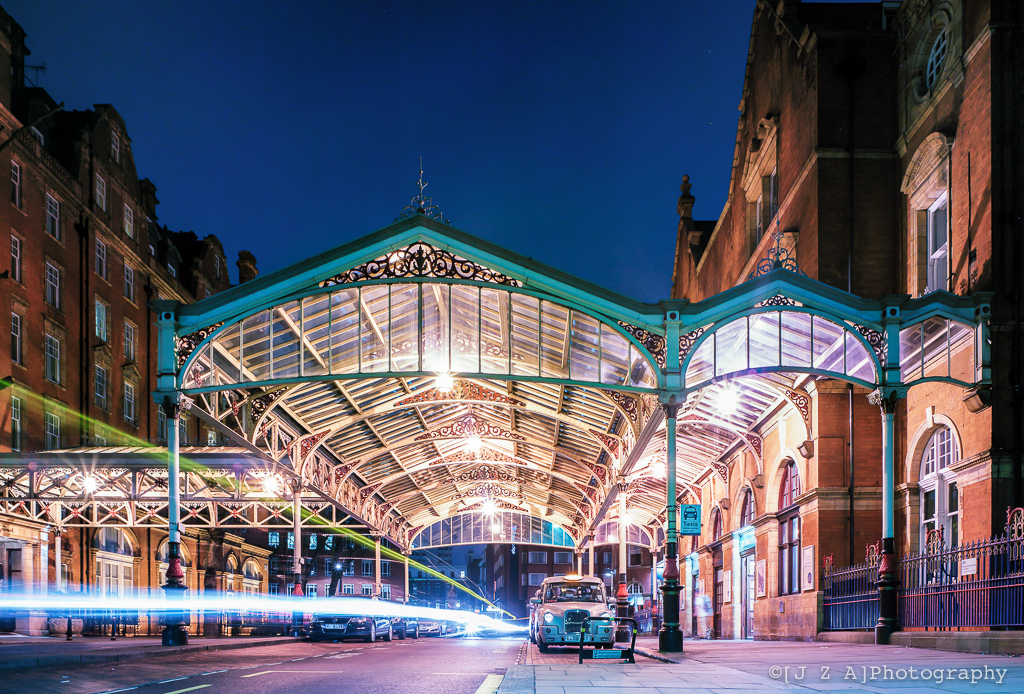
To find the taxi rank, come out of the station, across the forecourt with all the drunks and beggars, and bear right.
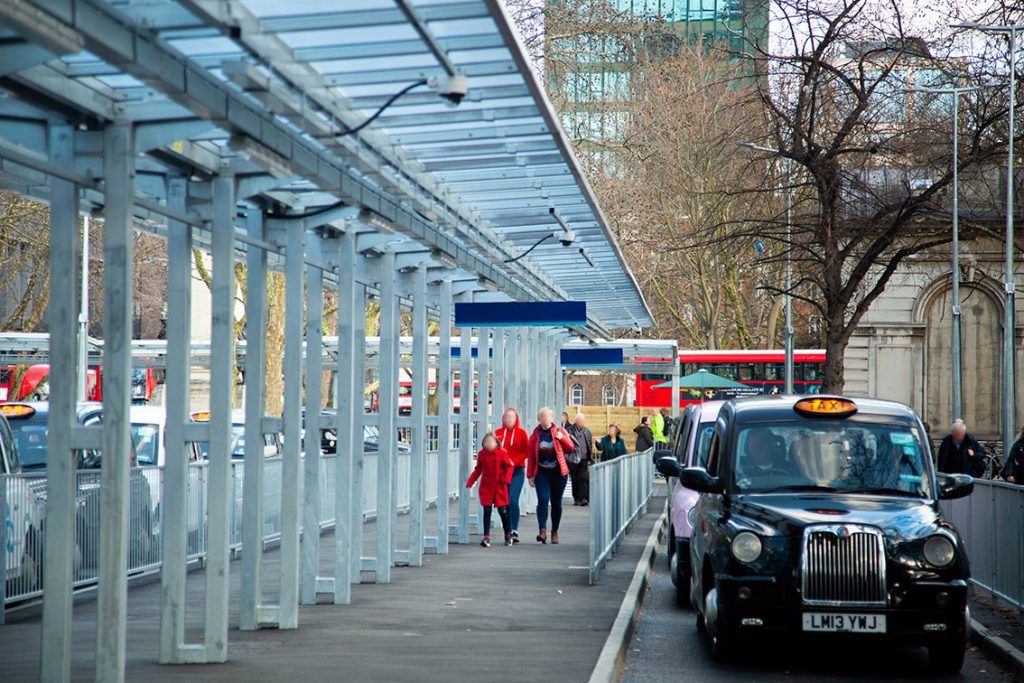
We find the taxi rank confusing.