Kodak

I became interested in photography in my early teens. I had an Ilford Sprite camera that took 127 roll film.
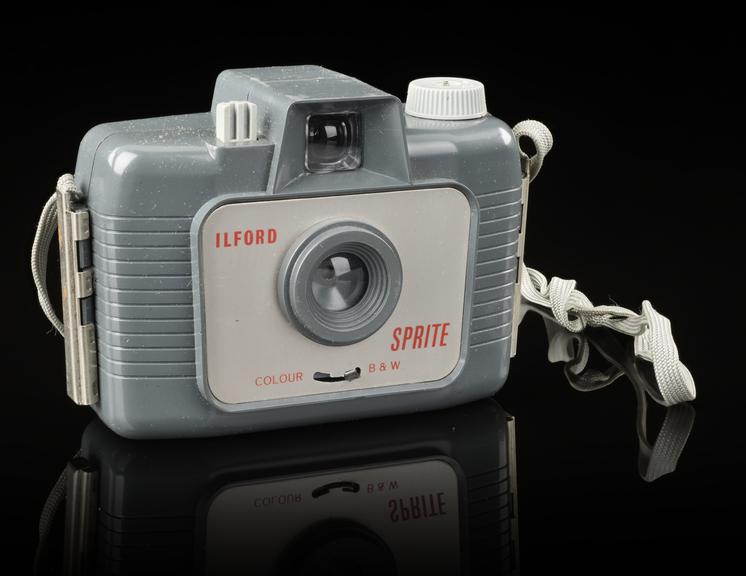
Ilford was a UK company noted for film manufacturing, especially black and white. The Sprite could take colour, but I don’t think I ever tried. I do have a big pile of black and white snaps from the later 60s that still look good.

My parents had a box camera that I never managed to get working.

When I worked in a camera shop, for five years, the big name in photography was Kodak. Kodak was founded by George Eastman in Rochester NY. Eastman had a house there and you can still visit it. There’s a cinema and often photography exhibitions and events.

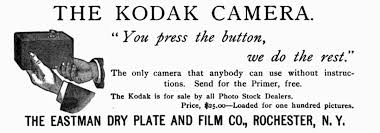
Kodak had a saying: You Press the Button, We Do The Rest. If it was easy to take pictures you would, and you would and buy their cameras and film.
Kodak made all types of film for photographers and for the cinema industry.

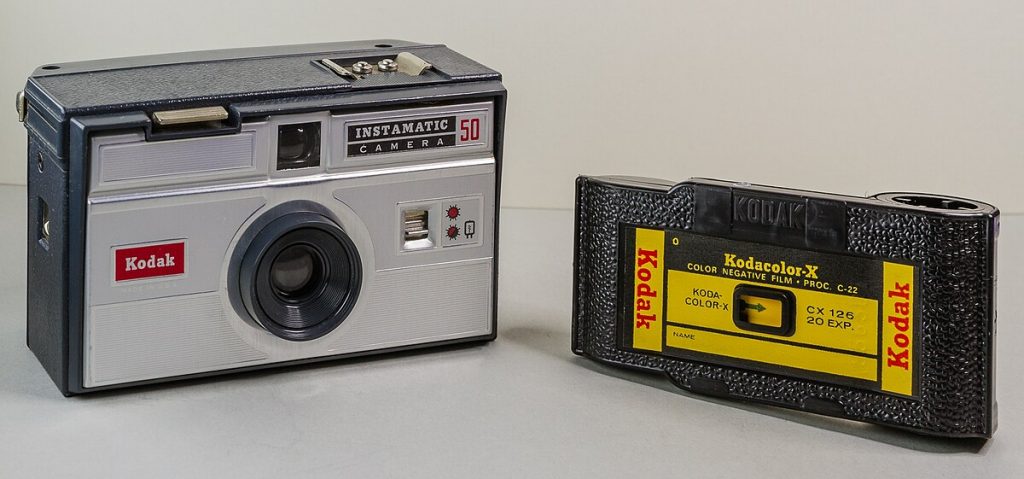
In our shop, by the seaside, the yellow box was a familiar sight and Kodak’s invention, the Instamatic camera, was hugely popular. On a sunny Sunday we could sell literally hundreds of films, and get them processed ready for the next day.
They also invented a smaller size film, the 110. The cameras were tiny. The picture quality was not good because of the small negative size. It was relatively a failure.
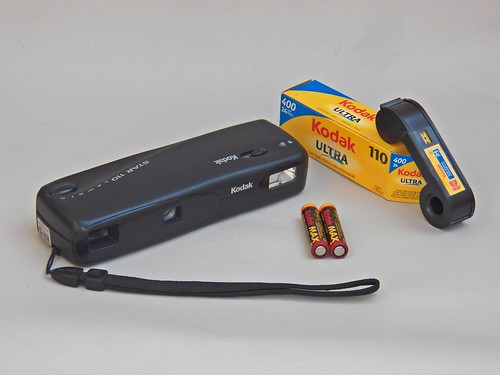
When digital photograhy started to become a thing, Kodak had an opportunity but missed the boat. It’s funny as, technically at least, they invented the first digital camera.

They are still around. Yes, you may be surprised to hear that. They do still make film, especially specialist film for movies. But the company has shrunk, and its future seems uncertain.

Here’s a recent article: https://edition.cnn.com/2025/08/12/business/kodak-survival-warning

Posted in News, Photography | Leave a comment

The Repair Shop II

The repair

The expert will say multiple times how difficult it is, how priviledged they are to be allowed to work on it, and so on.

At the start, they ask what the item is, how it got to such a state, what the customer wants and so on. They often remark that they are not sure what they will do to fix it. Very often they remark to the camera just how thrilled they have been to do something.

We’re never convinced of this, but understand it’s for the show. When the producers are choosing items, a good sob story will be highest priority, then an interesting object, then an assessment of the chance of success (after all, failure is not good tv) and the expert must be involved. They must know what is coming, to have the right tools and so on.

In a sixty minute show you may see five minutes of each actual repair. There may be four in an hour show. Vast amounts of time are given over to the sob stories, clips of other repairs not in that show, scenes of the countryside and of the experts having a chat or a cuppa. All very lovely, but filler.

The impression given by the show is that the expert does it themselves, in the barn. As we said before, there’s no indication of how long any job may take. It could easily be taken away, worked on and then brought back.

Someone remarked to us once that they believed at least some of the experts have assistants and off screen helpers. We don’t know if that’s true, but it doesn’t invalidate the repair. It’s just not usually mentioned in the show.

Posted in Television | Leave a comment

The Repair Shop I

There is a popular show on the BBC here called The Repair Shop.

It started in 2017 as a daytime show but got reasonable reviews and a big audience, so is now sometimes to be found as evening viewing, as well as the inevitable repeats on cable tv.

The idea is very simple: a member of the public, let’s call them “the customer”, brings a broken item with some personal significance to the barn, an expert repairs it and the item is returned to the customer.

Items can be pretty much anything, from musical instruments, furniture, pottery, art, electronic equipment, teddies, silver items… the list goes on. Occasionally, more than one expert has to be involved in a job. For example, repairing a wooden chair may need the services of a woodworker and an upholsterer.

The customer does not pay for the work to be done. That’s covered by the show.

Some aspects of the work are rather skipped over. Time frames for example. It is never clear just how much time passes between the item coming in and the work being finished. This could be different for each item, of course, but it would be great to know how many hours of work goes into something.

Some of the experts have become personalities and moved into other shows, or appear on daytime quizzes or chat shows.

We watched the show at the start, then gave up for reasons which will be explained later. Knowing that we wanted to write about it now, we looked at some current shows and some oldies, to see how it has changed.

Posted in Television | Leave a comment