The Mellotron

Fans of prog rock of a certain vintage will know what a Mellotron is. It figures in music by The Moody Blues, King Crimson, PFM, Pavlov’s Dog, The Beatles, Barclay James Harvest, Electric Light Orchestra, Yes, Pink Floyd…

Look, there’s a huge list. Have a look at this fantastic site, Planet Mellotron, to see more.

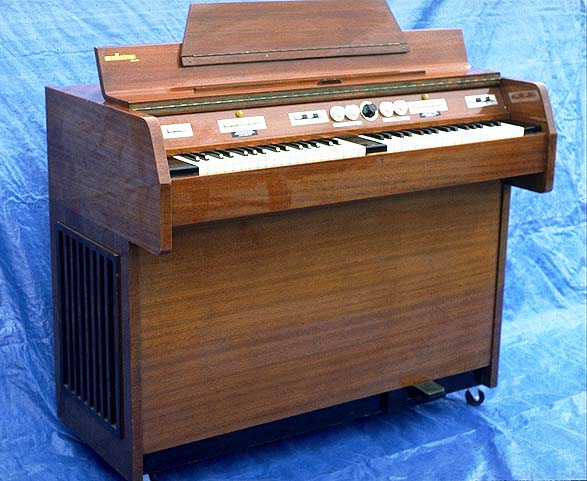
Many people say the Mellotron is an early form of sampler. It works by having a rack of pre-recorded tapes of a real instrument (or group of instruments or voices), each tape with a specific note, activated by pressing a key on a keyboard.

In fact, each piece of tape can hold three different instruments and you can select between them, or combine them. Each tape lasts roughly 8 seconds. It’s a purely mechanical, analogue device.

As you can imagine, the Mellotron is a pretty large and rather heavy instrument. Later ones had one keyboard, early ones had two, for rhythm/accompaniment and one for the tune.
There are lots of clips of the Mellotron in action, but we like this original clip with magician David Nixon.

It has a sound all of its own, something even modern emulators don’t quite capture.
Posted in Music | Leave a comment

Twelve British Songs… III

Julie Driscoll, Brian Auger and the Trinity

This Wheel’s on Fire

1968

Julie Driscoll was a singer and actress, later married to Keith Tippett, he of King Crimson fame. Brian Auger was a keyboard player.

The song is best remembered for its heavy use of Mellotron, progressing chords and being a theme tune to a tv show. Oh, some guy called Bob Dylan wrote it…

Posted in Music | Leave a comment

Synergy

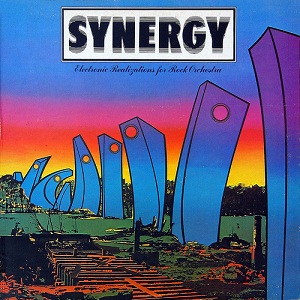
Larry Fast should be remembered as a pioneer of the synthesiser. Along with Tomita and Wendy Carlos, he used his Synergy platform to produce a number of albums that were grand in scale and orchestrally majestic.

His first album is Electronic Realisations For Rock Orchestra.

This is a great album. As well as original compositions, there’s a re-imagining of Slaughter On Tenth Avenue. After its release, the album was revised to add a stunning version of Mason Williams’ Classical Gas, which also appears on the second album, Sequencer.

There’s lots of analogue synthesiser, of course, plus Mellotron and, rather sneakily, no guitars (this is a nod to early Queen LPs).

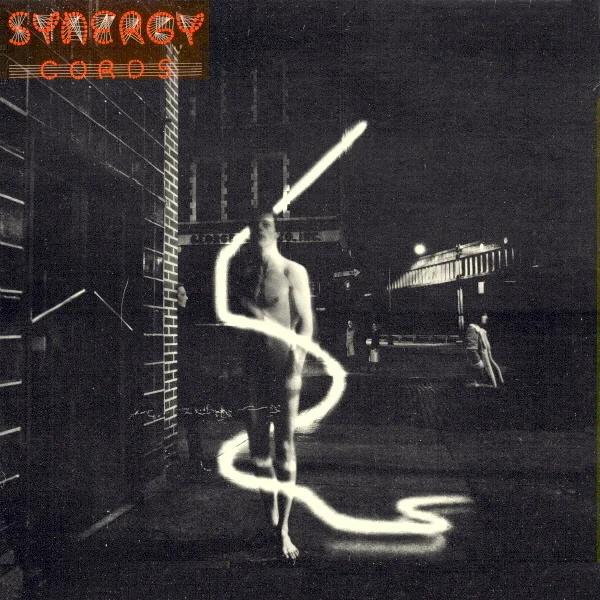
Of all the Synergy albums, we love Cords, on clear white vinyl, from 1978:

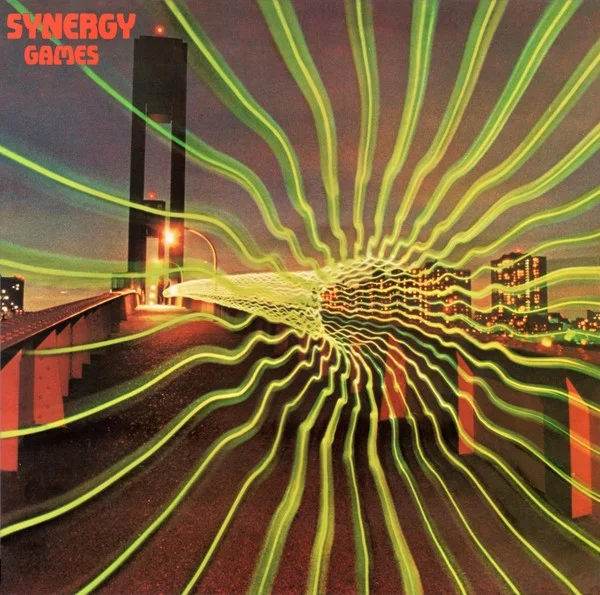
and Games, from 1979. Many of the tracks are pretty heavy, with crazy tricks played with the beat and the key signatures:

It is not impossible to find these on physical media. There are also some compilation albums, and a ‘new’ (well, 2002) re-recording of some tracks on digital equipment.

All are enjoyable.

Posted in Music | 1 Comment