I am told that visitors to the UK, especially from the USA, find English cash virtually impossible to understand. So let’s have a bash at trying to sort it all out.
Although we are part of the EC (for now), we do not use Euros. Traveling between Belgium, France, Spain etc is easy because they all use the same currency. Eire also uses Euros. We use pounds (usually written as UKP on computers, and £ on prices).
There are shops in London that accept some foreign currencies, but you pay for this convenience, so you may be better off paying by card. Banks, the post office and many booths and shops will convert currency. It pays to shop around for the best rate, but not too much as to waste your valuable holiday time.
The pound is divided into pence, or pennies, and there are 100p in the pound.
Notes are used for £5 and above. As with nearly all other countries, the notes are different colours and sizes and it is very difficult to get them mixed up, unlike the USA where notes are basically identical and you have to be careful to check you are not handing over a $100 bill thinking it is a $1. Also, notes vary with some being plastic (currently £5 and £10) and some paper. Make sure you are not given an old note in change that is no longer legal.
Very few shops will accept notes of £50 or above for small purchases. Some Oyster card machines will accept cash.
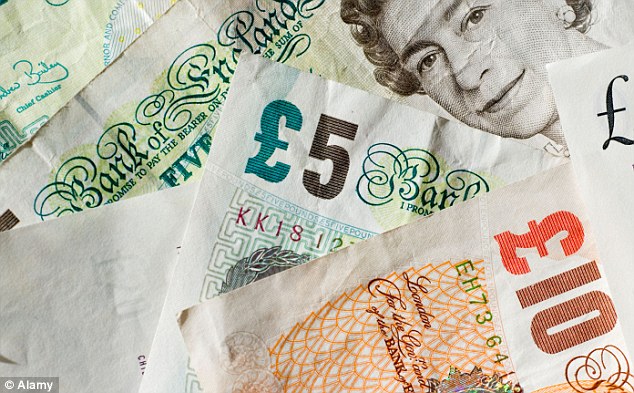
If you go to Scotland, you may be given Scottish notes rather than English ones. Some shops in England get rather sniffy about accepting these.
We have a lot of coins, of values 1p, 2p, 5p, 10p, 20p, 50p, £1 and £2. This is where it could get confusing.
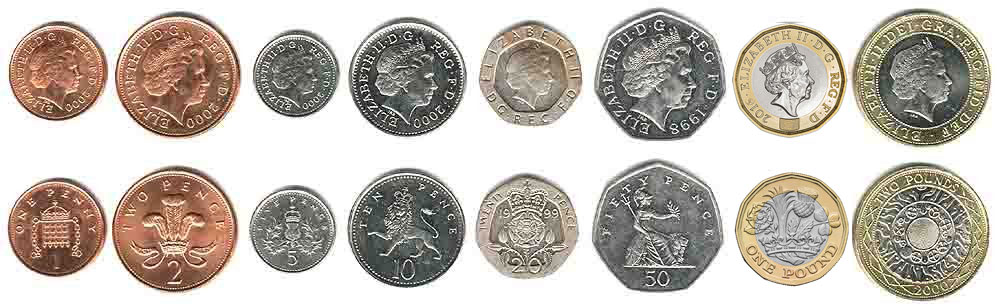
The picture shows the appearance and relative sizes of the coins. The design of the £1 coin has changed recently, so make sure that you are not given old coins.
Shops have a right to refuse you if you want to pay in piles of coins. For example, buying a £5 book with 10p pieces may not go down well. They call it ‘legal tender’. On the other hand, some shops really appreciate it if you have correct change (but don’t spend hours counting it out and holding up a queue).
The price you see on the sticker is the price you pay. There are no hidden taxes to add and no rounding to do.
It is very easy to accumulate pockets full of coins, but there are shops where you can serve yourself (eg supermarkets) at a machine, and it is a great place to empty your pocket of coins. If you find yourself with a pocketful of coins and leaving the country, eg at an airport, there are charity collecting boxes.
The worst coins to get rid of are 1p and 5p.
As for taxi fares, some taxis do accept cards, but check with the driver before you start the journey. If you need the driver to stop so you can get cash from an ATM, tell the driver before you get in. Many will not accept your fare. Since the taxi fare can vary depending on the distance, traffic jams, extras etc, it is best to make sure you have lots of cash, or book through a system that allows credit card payment on-line, or use a minicab that quotes a fixed price.