The death of silence

Sound films were considered by so many to be a fad. They would last a while and then the industry would revert back to silent films with live music and effects. The studios wanted this – having to rebuild their studios to accommodate sound recording equipment was going to be expensive. Movie theatre owners did not want it either, again because of the expense.

Eventually, as we know, pre-recorded sound became a thing, forever.

It certainly had an effect on the industry. Musicians who had worked in cinemas were out of a job, or at least had to find new jobs. The soundtrack was on the film, or at least on discs synchronised with the film. The studio orchestra did all the playing that was necessary. Customers in any cinema around the world could hear the exact same musical score.

As far as actors and speech were concerned, many had to re-evaluate their futures. Some silent stars who had heavy accents either had to retire or move back to their country of origin.

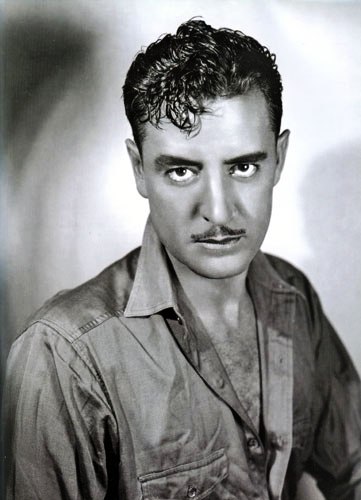
Voice coaches were employed for many. Again, “Singin’ In The Rain” shows this a little. Some stars continued but ultimately failed. A key example is John Gilbert who had been a huge star iin silents but, when he moved into talkies, the gossip was he had a terrible voice. It’s not true at all, he has a fine voice, it was just an opportunity for studio bosses to plot his ruin.
And, of course, stars like Garbo who had a heavy Scandinavian accent flourished. Her accent just added to her exotic air of mystery.

And what of comedians? Harold Lloyd continued into the sound era and created many more good films. Buster Keaton tried, but it didn’t work. Laurel and Hardy had been big silent stars, and became even bigger stars in the sound era.

Charlie Chaplin resisted. Remember that Charlie Chaplin at some point was one of the most famous and recognisable people in the world (especially in his tramp, or “little fellow”) guise. In 1931, when Chaplin released his masterpiece “City Lights” as a silent film with title cards and recorded music, the fact that there was no ‘talking’ was seen as an old-fashioned, unpopular and an out-of-step move.
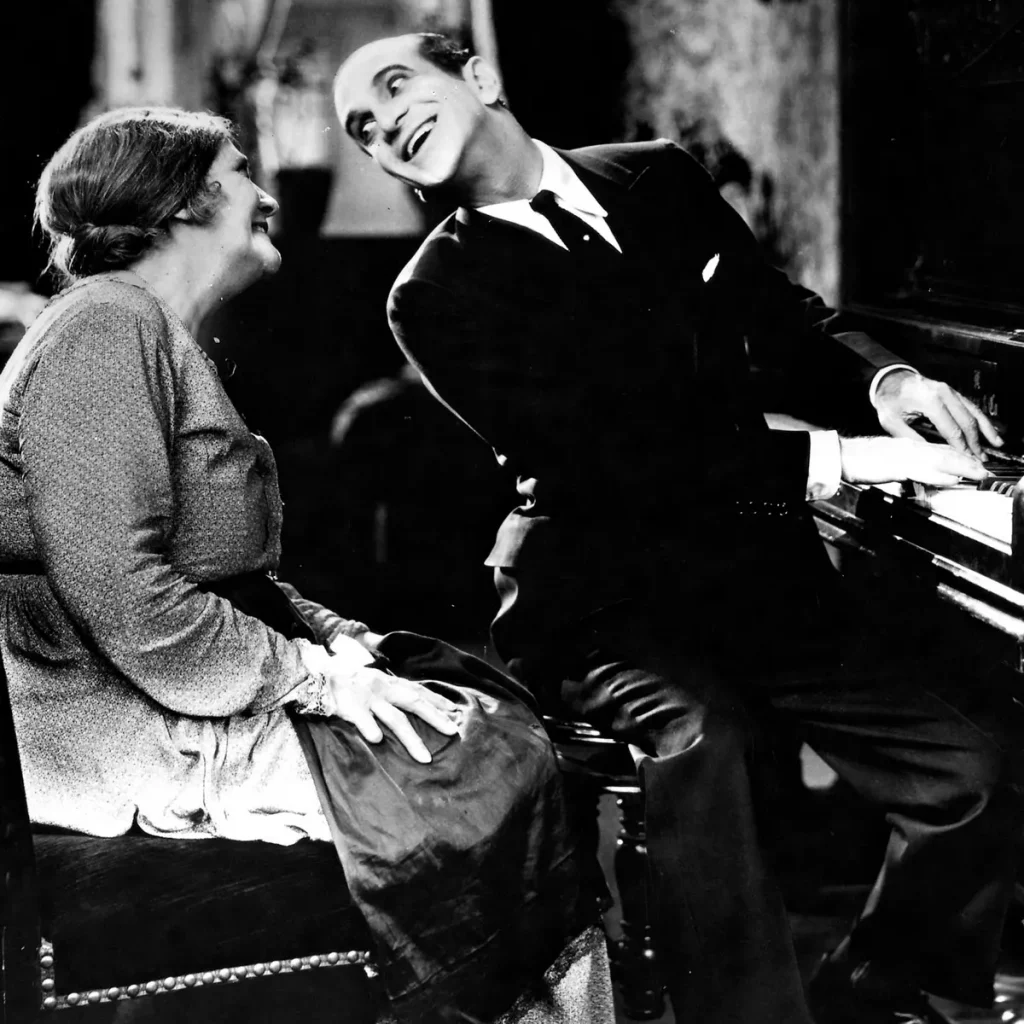
“The Jazz Singer”

If you ask people what the first talkie was you will get some funny answers. “Some Like It Hot”… “The Wizard Of Oz”, “The Jazz Singer”.

The latter film, from 1927, is generally considered to be the correct answer. It isn’t really, as we will see.

Well, OK, it depends what you mean by ‘talkie’. I am expecting a film with people talking throughout, something of feature length (ie not a short) and possibly a recorded musical score, though that is not essential.

This Al Jolson film does indeed have some speech, but it’s not all the way through, and mostly there are the usual intertitle cards explaining what is happening or what characters are saying. Yes, there is a recorded musical score and there are portions where Jolson sings live and talks, but they can’t add up to more than two or maybe three minutes in the whole film. The rest is really what you would call a silent film, well, silent with synchronised sound.

Jolson’s first words are “Wait a minute, wait a minute, you ain’t heard nothin’ yet”, except Jolson had made other short films with sound and had said this before. What stunned people watching was the free and improvised nature of what he said.

You can buy this film on home media. It’s worth watching. I find it rather squirm-worthy, not just by modern standards but by any standards. I like Jolson generally, and he was a great performer, and the film was a massive hit.

But let’s be clear, Warner Brothers themselves had produced feature films with complete synchronised scores long before this, and they produced the first all talkie film, “Lights Of New York” in 1928. Short sound films had been around since 1900, though 1923 or so is the first real record of sound films publicly demonstrated.

Nevertheless, as shown in “Singin’ In The Rain”, “The Jazz Singer” marked the point at which talkies became a thing. It has been re-made since, many times.

Some directors and producers embraced it, despite the difficulties. Others resisted. As the interviewees on “Hollywood” say, the silent film was an international language. It didn’t matter what you spoke, you could understand a silent film. The whole method of story telling changed. Talking was the thing.

One person who resisted was Charlie Chaplin.